

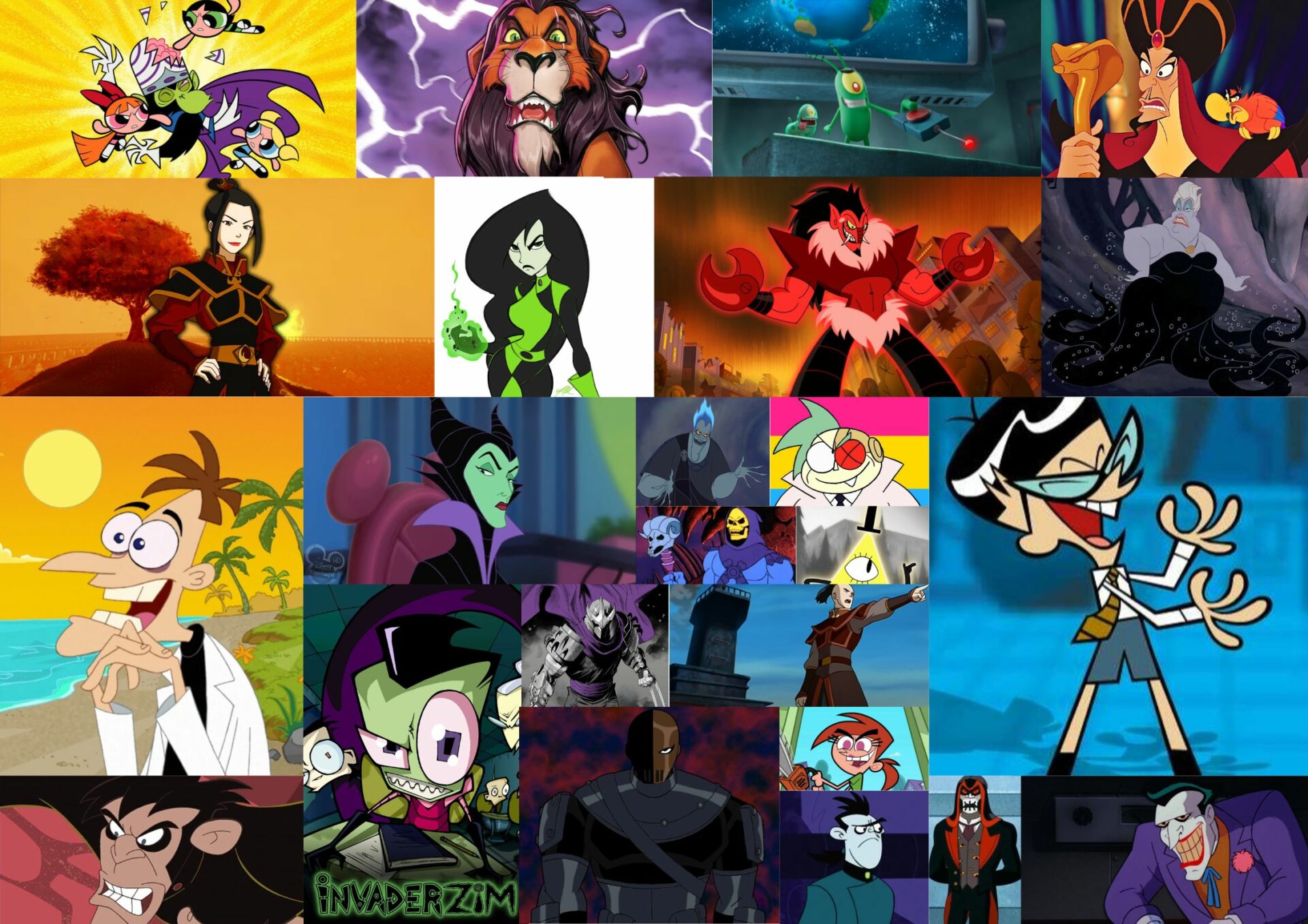
Top 30 Cartoon Characters That Were Villains
Our list rounds up the top 30 cartoon characters that were villains, each one more wonderfully wicked than the last.
Debates, Essays
There is a persistent debate about the assumed inferiority of African Literature compared to Western Stories.
Literature is a beautiful innovation. For the creatives and bibliophiles, books are an escape, a means of expression, or simply entertainment.
As with many things, there is a persistent debate about the assumed inferiority of African Literature compared to Western Stories, with many holding that the latter represents higher-quality writing.
To understand the roots of this discourse, recognize that this tension isn’t recent. It dates back to colonialism, when colonizers regarded African cultures, systems, and records as backward.
This comparison is present in the works of groundbreaking writers such as Chinua Achebe and Western counterparts like J.D. Salinger and Jack Kerouac, whose works had visibility but for different reasons. While one was considered universally accurate, the other was more often than not regarded as merely regionally viable, highlighting the impact of these perceptions on literary recognition.
African storytelling was, for the longest time, rooted in oral traditions such as folklore, proverbs, and myths.

Yoruba Mythology, dating back centuries, exemplifies the culture of word of mouth. Tales about the orishas (deities), cosmology (origins), and cultural values were passed down through elders and priests. Interpretive dance, music during festivals, proverbs, idioms, intercommunity trade, and the transatlantic slave trade also helped preserve these stories.
Also, the griots, famed oral historians and musicians, are among the proponents of indigenous narratives. Found in West Africa, griots recite the genealogies, family histories, and legacies of kings and nobles, often accompanied by instruments such as the kora or djembe. Interestingly, this role is hereditary, proving that the passion for preserving one’s culture exists.

Despite these oral roots, African literature is an expansive field. For instance, one of the oldest civilizations in Africa is Ancient Egypt, which used pictorial representations (hieroglyphs) and inscribed stone slabs to tell stories about gods, heroes, and religious texts, as well as royal chronicles.
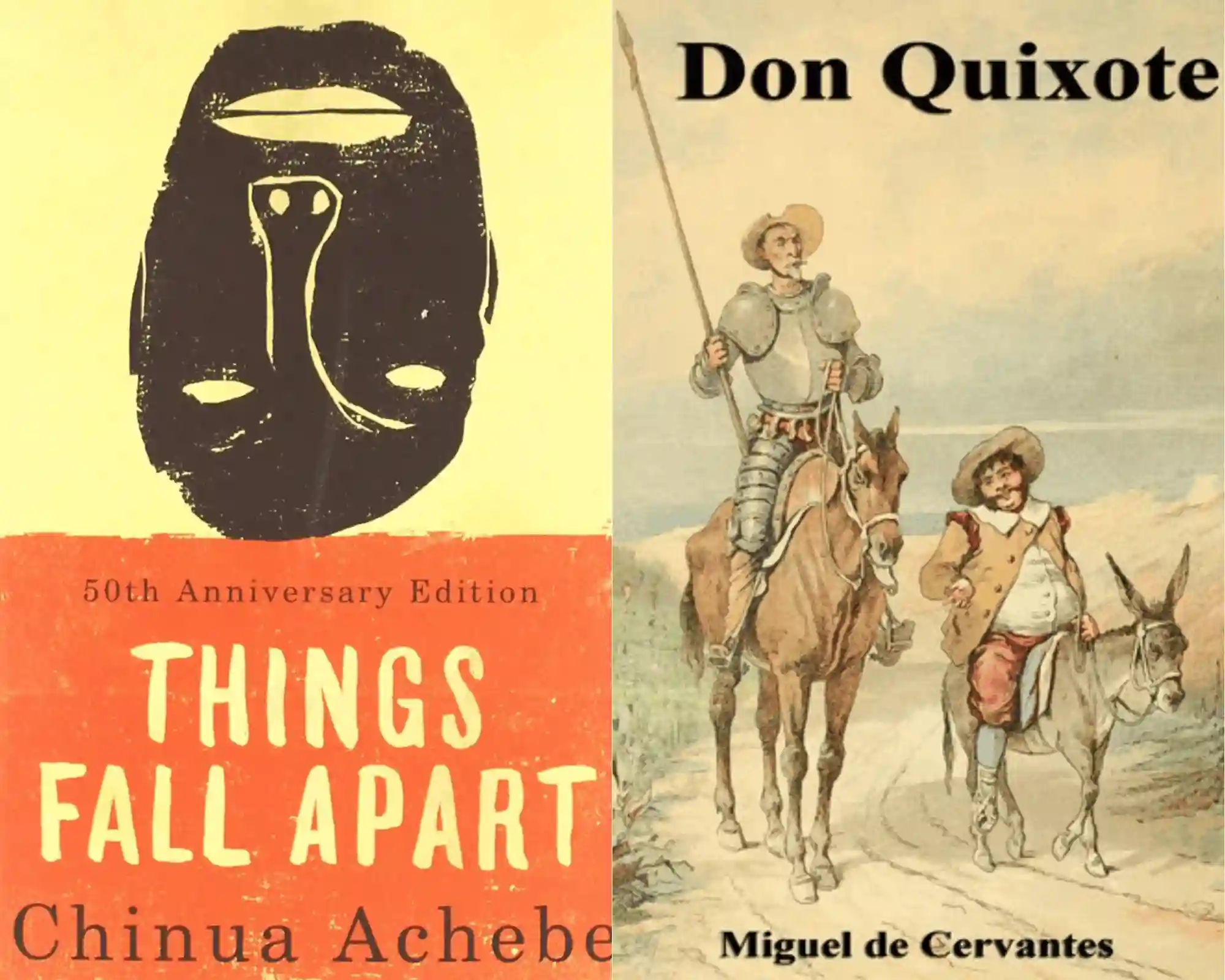
Someone had to transmit the enthraling tales from Africa to the world, and that is where Chinua Achebe came in. His 1958 novel, Things Fall Apart, is widely considered the first groundbreaking African novel written in English to achieve significant global critical acclaim.

Achebe released the book during a time of global focus on Africa, especially amid political movements.
During this time, African literature remained widely underrepresented and marginalized on the global stage, with non-African writers often misconstruing it. Things Fall Apart is both a correction of misinterpretations and a cultural lesson in the colonial language.
Western storytellers, on the other hand, also have a long history of documentation. Like their African counterparts, they began with oral traditions.

The Greek poet Homer composed The Iliad and The Odyssey in the 8th century BCE, works now considered foundational epic poems of Western literature.

The two poems focus on the conflict between Achilles and Agamemnon during the Trojan War, the eventual divine intervention, and Odysseus’s ten-year journey back to Ithaca after the Trojan War.

These foundational epics began as oral performances, delivered by singers at festivals and public gatherings. Performers used repeated phrases and rhythmic patterns to help remember the stories accurately and keep the audience engaged.
The Norse sagas are another well-known example. The Norse sagas are extensive 12th- to 14th-century prose narratives from medieval Scandinavia (modern-day Iceland) that document Viking history, genealogies, mythology, and heroic legends.
Before they were documented, highly skilled poets called skalds shared these stories orally. Their role was to record and enhance family histories, often highlighting virtues like honor, courage, and wit during feasts, communal gatherings, and ceremonial events.
Of course, there were other long-standing systems of recording around the world. However, Western storytelling’s early adoption of written methods and its global reach contributed significantly to making it the literary standard.
From the 15th to 19th centuries, Western culture, and by extension, its stories, was growing rapidly. Nonetheless, the influence never reached Africa until the trade for items like palm oil, minerals, rubber, and slaves, which eventually led to colonialism.

Once colonialism set in, so did the re-orientation. Traditional systems were deemed barbaric and native, so they were removed and replaced with more suitable systems. The traditional systems that were maintained, however, were structured to benefit the new leadership and give the impression that the status quo remained unchanged.
This directly affected education through the course material. The new curriculum focused on writers such as William Shakespeare and Charles Dickens. As a result, students were graded on and frequently exposed to realities unlike their own, which led them to view Western stories as the pinnacle of literature and to unconsciously internalize values from their upbringing rather than those of their everyday lives.
The writing styles of emerging creatives often mirrored Western settings, narrative structures, and storytelling conventions.
For example, Amos Tutuola’s The Palm-Wine Drinkard draws on Yoruba folklore and uses unconventional English to appeal to Western audiences.

Similarly, Efua Sutherland’s early plays blend Western structures, such as three-act formats and Aristotelian arcs, with Ghanaian folklore. The likelihood that they made stylistic choices to navigate the publishing process is high and entirely understandable, given the realities of the time.
This change in thinking has persisted over the years and influenced even contemporary African writers. In her TED Talk, The Danger of a Single Story, Chimamanda Ngozi Adichie describes how, as a child growing up in Nsukka, Enugu State, she wrote stories about girls with blonde hair and blue eyes before she began writing stories that reflected her own experiences.
African Literature has, amid many changes, fought for a place of respect. There is now more material that writes African realities for African audiences.

These books now span many genres, including romance, coming-of-age, fantasy, and speculative fiction.
Romance is thriving with African Writers. Americanah, Holiday Hideaway, Love Happens Eventually, Broken, Not a Halal Love Story, and The Marriage Class are all works that explore different approaches to love, such as second-chance romance, Christmas connections, forbidden love, and religious love, in ways that feel truly unique to the current realities of Africans.
The younger ones need their own niche, and that is where coming-of-age books come in. A well-known and respected example is Chimanda Ngozi Adichie’s Purple Hibiscus. The 2005 Commonwealth Writers’ Prize winner is a journey to Nsukka, with tough family dynamics, life, crushes, and choices, all executed, to say the least, masterfully.
Another loved title is The Last Day at Forcados High. The book was published in 2013 and was listed as the official Joint Admission and Matriculation Board (JAMB) study material in 2016. The appeal of A.H Mohammed’s Book is that students loved the material not because it was mandatory, but because of its conversational, relatable, and intriguing nature.
Fantasy, a genre long mastered by Western audiences, is now being adapted to African settings in creative and thought-provoking ways. Tomi Adeyemi’s Children of Blood and Bone is the first part of a three-book fantasy installment that delves into Yoruba Mythology reimagined in an interesting way. Some skeptics would say the author did accurately represent the culture, but all art is subject to criticism.
Namina Forna’s The Gilded Ones comes from a different direction. Rooted in rich West African mythology, the book depicts a realistic patriarchal system and a refusal of oppression, making it a well-deserved commercial success and a must-read.
While Fantasy covers fictional worlds and beliefs, speculative fiction goes for the “what if”. Nnedi Okorafor takes readers to the world of Folkore with Akata Witch. Akata Witch explores African culture, magic, community structure, and the well-known tale of the ogbanje (reincarnated spirit child).
In Womb City, Tlotlo Tsamaase takes readers on a journey through a society gone wrong, featuring cyber-horror and terrible leaders.
Despite the comparisons between African Literature and Non-African storytelling, the latter has the upper hand, with better results from years of practice.

Western Literature has a long history of documented practice dating back to before the advent of the printing press, giving its African counterparts a significant head start.
The art of writing a novel goes to Don Quixote. Miguel de Cervantes’ Don Quixote is considered the founding work of Western literature and the first novel. This initial work of art has paved the way for other successful titles in genres such as romance, mythological retellings, and fantasy, among others.
No region has a monopoly on affection. Romance has existed, especially in written narratives, but it has always been in the company of community, duty, and other factors, without a guaranteed happy ending. However, writers like Jane Austen centred romance as the main plot with a clear resolution.
This style soon inspired other mainstream publishers, such as Mills & Boon and Harlequin, and more recent publications to expand the scope of documented romance and influence the genre as a whole.
A commendable action Western stories have taken is to repack their culture in a way that promotes it rather than coming across as negative. For instance, Greek Mythology was largely a sacred, religious text with little to no reinterpretation to preserve originality.
Ovid, the ancient Roman poet, started this process by reshaping Greek myths into clear written narratives. Since then, the trend has continued with titles such as Rick Riordan’s Percy Jackson and the Olympians, The Son of Achilles, and Circe that appeal to both young and adult audiences.
Fantasy is a genre recognizable for its use of interesting worlds, magic systems, quests, prophecies, and destinies. It would be a disservice to mention fantasy without the generational success of J.R.R Tolkien in The Lord of the Rings Series.
A Song of Fire and Ice picked up the mantle of great plots, employing political realism and moral ambiguity rather than good vs evil. J.K. Rowling’s Harry Potter followed the standard, structured world-building, good-versus-evil struggle, and hero’s quest that appear in fantasy, but for a coming-of-age audience.
Narratives, African or Western, begin with our search for identity, culture, and memory. They reflect who we are, where we live, and the stories we carry.
So, Literature or Western Stories? Diplomatically, it depends on preference. Some gravitate toward Western Stories, drawn by their structured writing style, the long-established publishing industry, and the predictability of a global literary canon. Others gravitate towards tales that feel familiar, echoing the sights, sounds, and rhythms of home.
An admittedly biased perspective is that quality African literature is the go-to. It offers variety and spice across realities, making it addictive. Still, there’s always room for occasional Percy Jackson, Kane Chronicles, heartfelt romance, and a touch of light fantasy.
Ultimately, the choice is up to the reader. After all, as the popular saying goes, there are a 100 ways to skin a cat. Enjoy the next read!
Our list rounds up the top 30 cartoon characters that were villains, each one more wonderfully wicked than the last.
DC is great at making comics and animated movies, while the MCU has the upper hand in its cinematic aspects
There are some outright funny cartoon characters who exist solely to crack you up, loud, hard, and with zero apology.

Discover the best apps to read books for free in 2025. Access thousands of free e-books and audiobooks on your phone or tablet. ...

Things Fall Apart is for the colonizers as well as the colonized, helping to understand the role of colonialism in the realization...

While many of the Nollywood movies on our list are quite old, it’s a testament to the capabilities of the industry’s p...

While this isn’t an exhaustive list, it comprises some of the most popular mythical creatures from around the world.
Get our magazine for free!