































Some vampires depend on brute force. Where do your favorite famous vampires rank in the hierarchy of the undead?
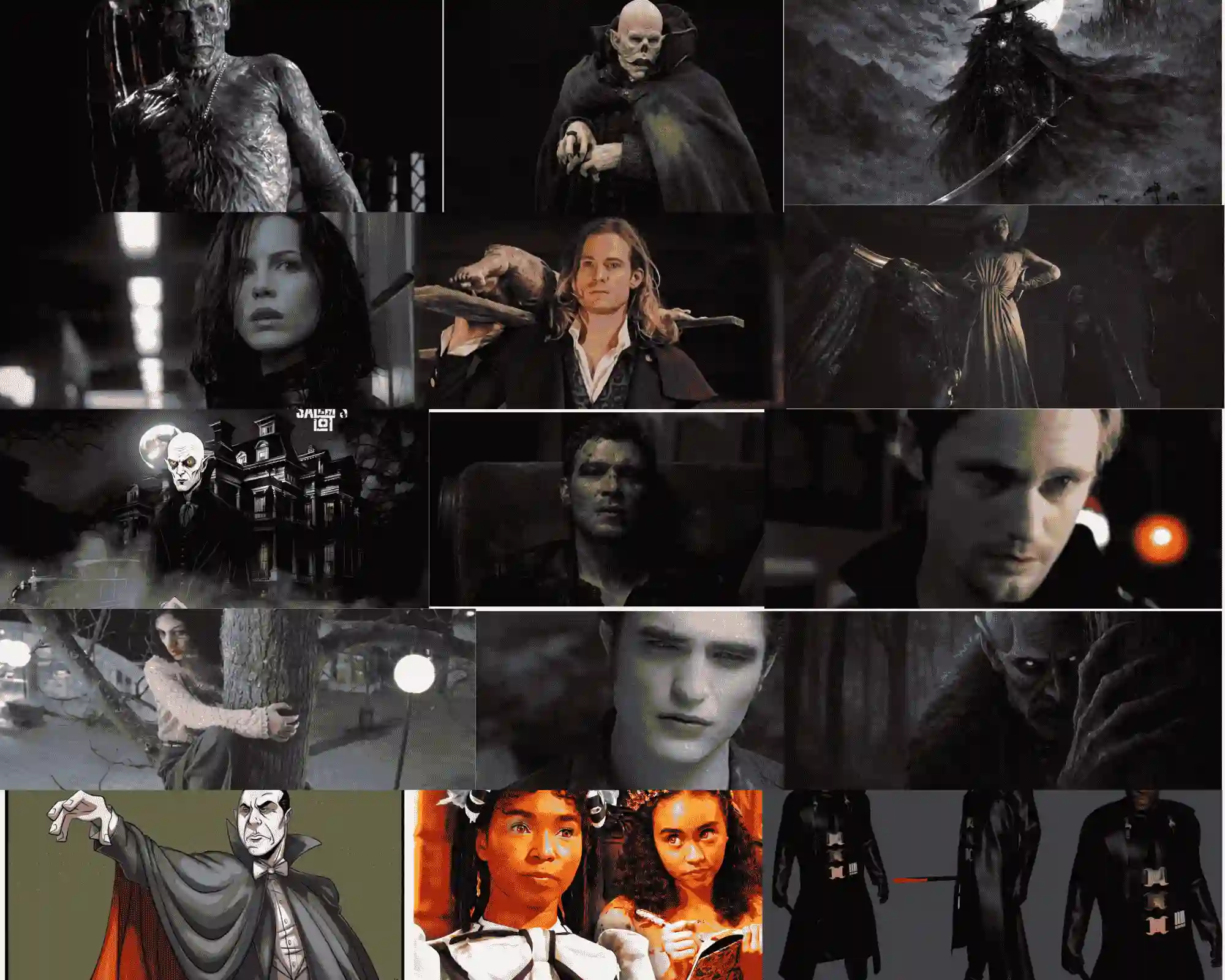
Where do your favorite famous vampires rank in the hierarchy of the undead?
Debates often focus on kill counts. Some vampires depend on brute force while others thrive on charm. The enduring appeal of the well-loved night crawlers lies in their versatility.
In this ranking, the most iconic bloodsuckers are measured against the three pillars of vampiric allure: mystery, danger, and intrigue.
Mystery is the foundation of the vampire myth. These characters are defined by what they don’t say and the ancient secrets they guard.
Count Orlok remains the pinnacle of mystery because he is stripped of all human comfort.

As one of the first famous vampires to haunt the silver screen, he does not offer a tragic backstory or a seductive invitation.
Instead, he is a silent, twitching manifestation of the plague. His movements are unnatural, and his origins are buried under the weight of old-world superstitions. Orlok represents a walking corpse that brings death without ever explaining why.
His silent presence is amplified by the shadows he casts, which often move independently of his body. This suggests a supernatural geometry that defies human logic. This visual storytelling cements his status as a herald of doom, rather than as a traditional character with relatable goals.
Furthermore, the lack of verbal communication leaves his internal world completely inaccessible. There are no monologues about his loneliness or his hunger. There is only the rhythmic, terrifying advance toward his next victim, making him an enduring symbol of the inexplicable nature of death.
Adrian Tepes, known as Alucard, is a figure defined by his contradictions.

As the dhampir son of Dracula, he carries the mystery of a man who belongs to two worlds yet is accepted by neither. He often retreats into centuries of self-imposed slumber, waking only when the world is in peril.
His elegant, brooding silence hides a vast knowledge of forbidden magic and science. The true extent of his power and the depths of his grief for his mortal mother make him a perennial enigma in the vampire canon.
Beyond his martial prowess, his mystery deepens with his residence in the moving Castle of Dracula, a place filled with shifting corridors and arcane machinery. He wanders these halls as a ghost of his own lineage, protecting a legacy he simultaneously seeks to dismantle.
His interactions with mortals are guarded, revealing a soul that is ancient yet perpetually youthful. This emotional distance ensures that even his closest allies never fully grasp the burden of his immortality or the secrets he keeps regarding his father’s true origins.
While many famous vampires lean into their history, Eric Northman carries his thousand-year past like a shield. As a former Viking prince turned Sheriff of Area 5, Eric is simultaneously transparent and completely unknowable.

His mystery doesn’t stem from a lack of information, but from the calculated way he reveals his true self. One moment, he is a cold-blooded businessman, and the next, a fiercely loyal warrior. This duality keeps both his allies and his enemies guessing, making him the gold standard for enigmatic immortals.
His Viking roots provide a bedrock of ancient violence that occasionally surfaces through his polished, modern exterior. When he reverts to his native tongue or speaks of the old gods, he reminds everyone that he is a relic of a much harsher, bloodier world.
Angel’s mystery is rooted in the duality of his existence. Cursed with a soul to repent for centuries of slaughter, he is a man constantly at war with his own shadow.

The enigma of whether he is truly a hero or a monster on a leash provides a layer of narrative tension that few other famous vampires can match. He is the ultimate “brooding” archetype, defined by the secrets of his dark past.
The mechanics of his curse (the promise of losing his soul upon experiencing true happiness) add a tragic mystery to his every emotional connection. He walks a razor’s edge where his own contentment is the greatest threat to the world he tries to protect.
Even during his time in Los Angeles, his work as a private investigator often leads him into the occult fringes, where he thrives in the darkness. He remains a man of few words, preferring to let his redemptive actions speak for the silence he maintains regarding his deepest shames.
Eli introduces a chilling layer of mystery by inhabiting the body of a perpetual twelve-year-old.

The disconnect between a child’s face and an ancient, weary soul creates a haunting atmosphere that redefined the genre.
There are only fleeting glimpses into Eli’s past: hints of a forced, gruesome transformation centuries ago. This lack of concrete history forces the audience to fill in the dark blanks. It makes Eli one of the most unsettling famous vampires in modern fiction.
Eli’s nature as a genderless or castrated being adds a layer of biological mystery that challenges traditional tropes. They exist in a state of suspended animation that is both pitiable and terrifying. Oskar, the protagonist, can never truly solve this riddle.
D is a wandering dhampir who travels a far-future Earth where gothic horror meets high-tech sci-fi. He is a man of few words. His true motives are rarely clear to those he saves.

Adding to his mystery is the sentient, wisecracking symbiote in his left hand. This sidekick sharply contrasts D’s stoic nature. He bears the weight of an ancient lineage he won’t discuss, making him a legend whispered in the wastelands.
His origins are linked to the “Sacred Ancestor,” a figure implied to be Dracula himself. Yet, D operates with a level of autonomy that borders on the divine. He moves through a world of cybernetic monsters and decaying castles as a silent judge of the supernatural.
The Master abandons the traditional image of an “aristocrat in a cape” for something far more alien.

He is a biological mystery, an ancient parasite that spreads through white worms and serves as a hive-mind leader.
His origins reach the dawn of time. He embodies the mystery of a predator intent on rewriting the food chain.
Danger is the sharp edge of the vampire’s tooth. These figures are lethal, lack mercy, and are a threat to anyone, human or vampire, who crosses their path.
Dracula is the gold standard for famous vampires.

His danger is all-encompassing. He is not just a brawler with fangs. He is a master of the natural world. Dracula can command wolves, control the weather, and transform into mist. His lethality is amplified by his strategic genius and vast wealth.
These resources allow him to infiltrate modern society with ease. Dracula represents the danger of an apex predator with the patience of the immortal and the resources of a king.
His danger is also psychological; he seduces before he strikes, turning his victims’ own desires into the chains that bind them. He doesn’t just take a life; he claims the soul, turning former friends into hollow servants of his will.
Also, his castle in the Carpathians serves as a fortress of absolute lethality, filled with traps and ancient horrors that ensure no intruder ever leaves alive.
Blade stands as one of the most dangerous entities because he is the “Daywalker.” Erik Brooks has the superhuman strength, speed, and healing of famous vampires, without their fatal vulnerability to sunlight, making him a tactical nightmare.

He treats vampire hunting like a military operation. For any other bloodsucker, encountering Blade isn’t a fight; it’s an execution.
His danger is heightened by his lack of hesitation; he views the world in binary terms of predator and prey. He is a one-man army who has spent decades perfecting the art of killing, making him the most efficient slaughterer of the undead.
A modern powerhouse, Alcina Dimitrescu is a literal giant among famous vampires.

She stands nearly ten feet tall and has retractable, razor-sharp claws. Her danger is visceral and immediate. Dimitrescu does not need to hide in the shadows because her physical strength is overwhelming.
Escape is nearly impossible because she views humans as nothing more than vintage wine to be bottled and consumed at her leisure. Beyond her physical stature, her regenerative abilities make her nearly unkillable by conventional means. She pursues her prey with a terrifying, slow-moving confidence, knowing that time and gravity are always on her side in the narrow corridors of Castle Dimitrescu.
Stephen King’s master vampire is a terrifying return to the myth’s primal roots. Barlow is dangerous like an illness that slowly dismantles an entire town.

The Master doesn’t seek a grand stage; he quietly turns neighbors against one another, growing his army of the undead in the dark basements of small-town America. He is the danger of a predator that you don’t see coming until your entire world has already been consumed.
His presence is felt, a heavy dread that settles over ‘Salem’s Lot’. He is a master of the slow burn, preferring to erode the will of his victims before he drains them.
Once he strikes, the transformation is total. He doesn’t just kill, he replaces the living with hollow, hungry versions of themselves. Ultimately, creating a self-sustaining cycle of death that can wipe out a community in a matter of weeks.
Deacon Frost represents the danger of unchecked ambition in the modern era. Unlike the older vampires who prefer to hide in the shadows of tradition, Frost wants to accelerate the evolution of his species.

He seeks to summon ancient blood gods to turn the entire human race into a permanent food source. His danger stems from his lack of restraint and his willingness to burn down the secret society of vampires to achieve a new, more violent world order.
He is a tech-savvy predator who uses the tools of the modern age, from laboratories to underground raves, to mask his genocidal plans. Frost represents the danger of a monster that has learned to manipulate the system from within.
In the world of famous vampires, Viktor represents the danger of institutional power combined with ancient ferocity. As a Vampire Elder and a former warlord, he commands an army of “Death Dealers.”

The Dark Father’s danger lies in his complete lack of sentimentality. He is a cold, efficient killer who views everyone, even his own “daughter,” as a pawn. His combat prowess is legendary, but his willingness to destroy anything in his path is what makes him truly terrifying.
His danger stems from his experience; he has fought in wars spanning centuries, mastering every weapon and tactic known to man. He is a strategist who treats the battlefield like a chess set, always thinking ten moves ahead of his lycan enemies.
Even in his weakened state between slumber cycles, his authority is absolute. He rules through fear and tradition, and his wrath is a scorched-earth policy that leaves no survivors, ensuring that his reign is never challenged from within or without.
Lestat is perhaps the most multifaceted figure among all famous vampires.

Often called the “Brat Prince,” he rejects the trope of the moping, guilt-ridden immortal. He is a philosopher, a rock star, and a rebel who craves the spotlight.
What makes him so intriguing is his constant reinvention and indulgence in every imaginable vice. He is the ultimate reflection of our own desire for eternal youth and rebellion.
His narrative voice is seductive and arrogant, inviting the reader to find beauty in the macabre. He is a character who challenges the status quo of the undead, constantly breaking the “Masquerade” to engage with the human world in spectacular ways.
The royals’ relationships are equally complex, defined by intense love and equally intense betrayal. He is a creature of passion who cannot help but destroy the things he loves, making his journey a tragic cycle of search and loss that spans the globe.
As the world’s first vampire-werewolf hybrid, Klaus is a whirlwind of psychological complexity.

His intrigue comes from a desperate need for family and a paranoiac tendency to control his siblings. Hope’s daddy is a king, terrified of being alone, driven by a thousand years of betrayal and loneliness. Interestingly, his capacity for both extreme cruelty and surprising tenderness makes him one of the most unpredictable and compelling characters in television history.
He is a master manipulator who treats people like toys, yet he is haunted by a deep-seated desire for art and culture. This duality makes him a figure of endless fascination, as one never knows if he will quote poetry or rip out a heart.
Klaus’s legacy as an “Original” means his intrigue is tied to the very history of the vampire species. Every action he takes ripples through the supernatural world, making him the central axis around which countless lives and deaths revolve.
Edward’s intrigue lies in his absolute self-restraint and in subverting his predatory nature. He represents the “vegetarian” vampire who fights his own biology daily to protect the human he loves.

This internal conflict created a global cultural phenomenon, focusing on the tension between a monster’s instinct to kill and a man’s desire to love.
His struggle to navigate a high school existence while harboring the power of a god is the ultimate dramatic hook for a modern audience.
The Cullen family dynamic adds another layer of intrigue, as they operate like a secret society of “civilized” monsters in the middle of small-town America. The rules they live by and the telepathic burden Edward carries make him a character defined by mental isolation. He is a romantic hero who views his own immortality as a curse, creating a melancholy allure that has captivated millions.
Selene brings a noir-inspired intrigue to the vampire mythos. As a “Death Dealer” caught in a corporate-style war between vampires and Lycans, her journey is one of political betrayal.

She is a soldier who becomes a detective, uncovering the dark lies her elders told to justify a centuries-old conflict. Subject 1 evolves from a loyal assassin to a revolutionary leader who defies her own kind. This character development defies her own kind and provides a high-stakes narrative that keeps viewers questioning her true nature.
Selene operates in sleek leather and blue hues, embodying the “cool” of the modern vampire. The obvious stoicism hides a deep-seated trauma that slowly unfolds as she learns the truth about her family’s past. The romance she finds with a hybrid further complicates her social standing, making her an outcast among outcasts.
Predating Dracula by over twenty years, the Countess Carmilla Karnstein introduced the concept of the seductive, predatory houseguest. Her intrigue lies in the subtlety of her hunt; she infiltrates aristocratic households and slowly drains her victims while posing as a frail, charming friend.

Her story is a foundational piece of Gothic literature that blends sensuality with a creeping dread, establishing the “vampire socialite” archetype that would influence almost every female vampire character created since.
The tragedy of Claudia is one of the most intriguing concepts in Gothic fiction.

A woman’s mind trapped forever in a child’s body, she represents the horrific reality of immortality without growth. Her resentment toward her creators and her manipulative brilliance make her a chillingly complex character. Among famous vampires, her story is a dark exploration of identity and the cruelty of eternal youth.
Despite her icy exterior, her backstory reveals a woman who chose vampirism as a way to escape a life of degradation. This choice gives her a level of agency and grit that makes her one of the most relatable yet terrifying figures in the series.
Whether they are silent, plague-bearing monsters or complex anti-heroes, the most famous vampires endure because they mirror our own deepest fears and wildest fantasies.
When viewed through the lens of mystery, danger, and intrigue, it becomes clear that their true power lies not in their fangs but in their ability to adapt to every era. These icons remain the ultimate symbols of what it means to be immortal, powerful, and forever misunderstood.

July 20, 2025 .
Animation, Lists
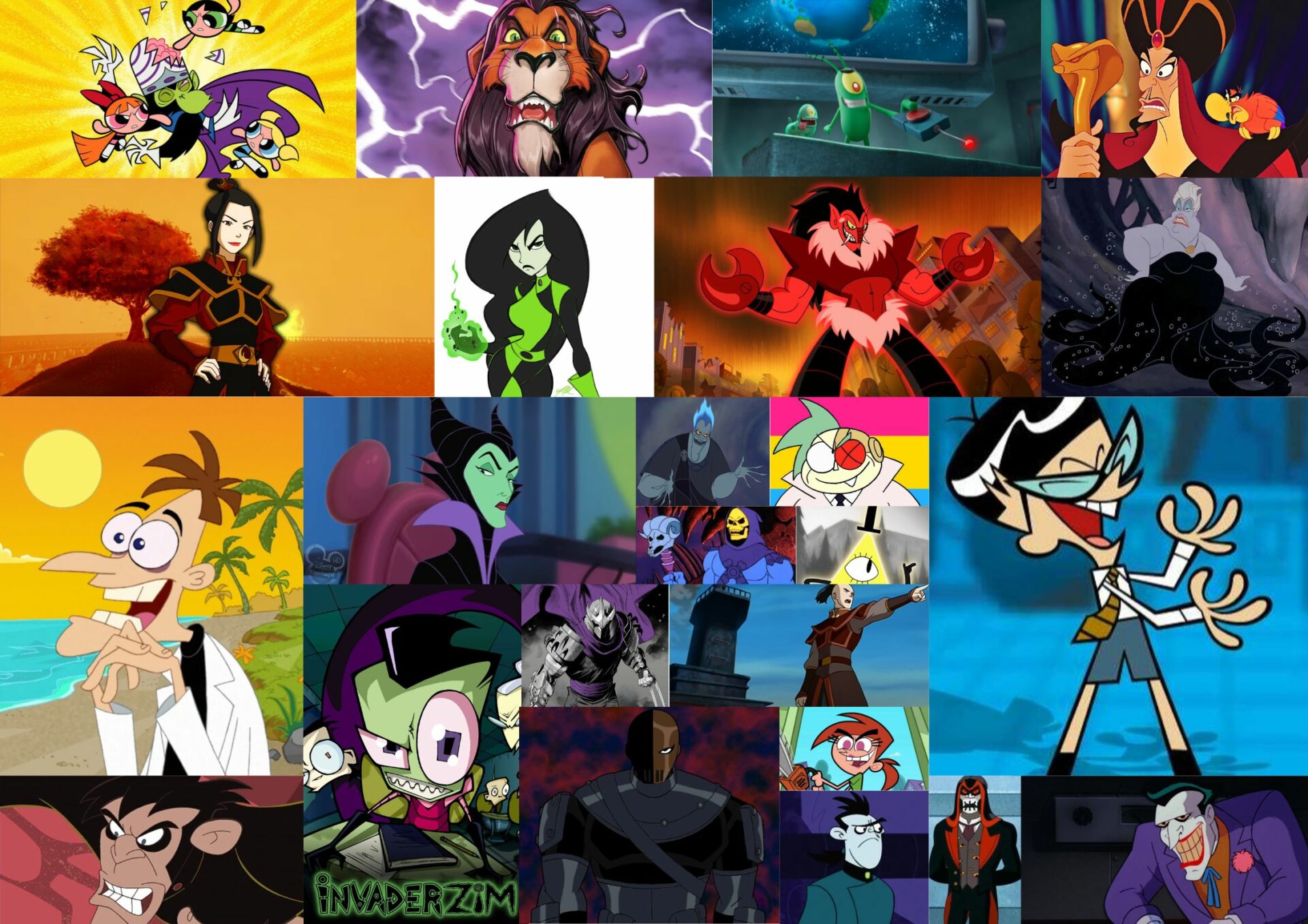
Our list rounds up the top 30 cartoon characters that were villains, each one more wonderfully wicked than the last.
READ MORE
April 29, 2026 .
Lists, Opinions
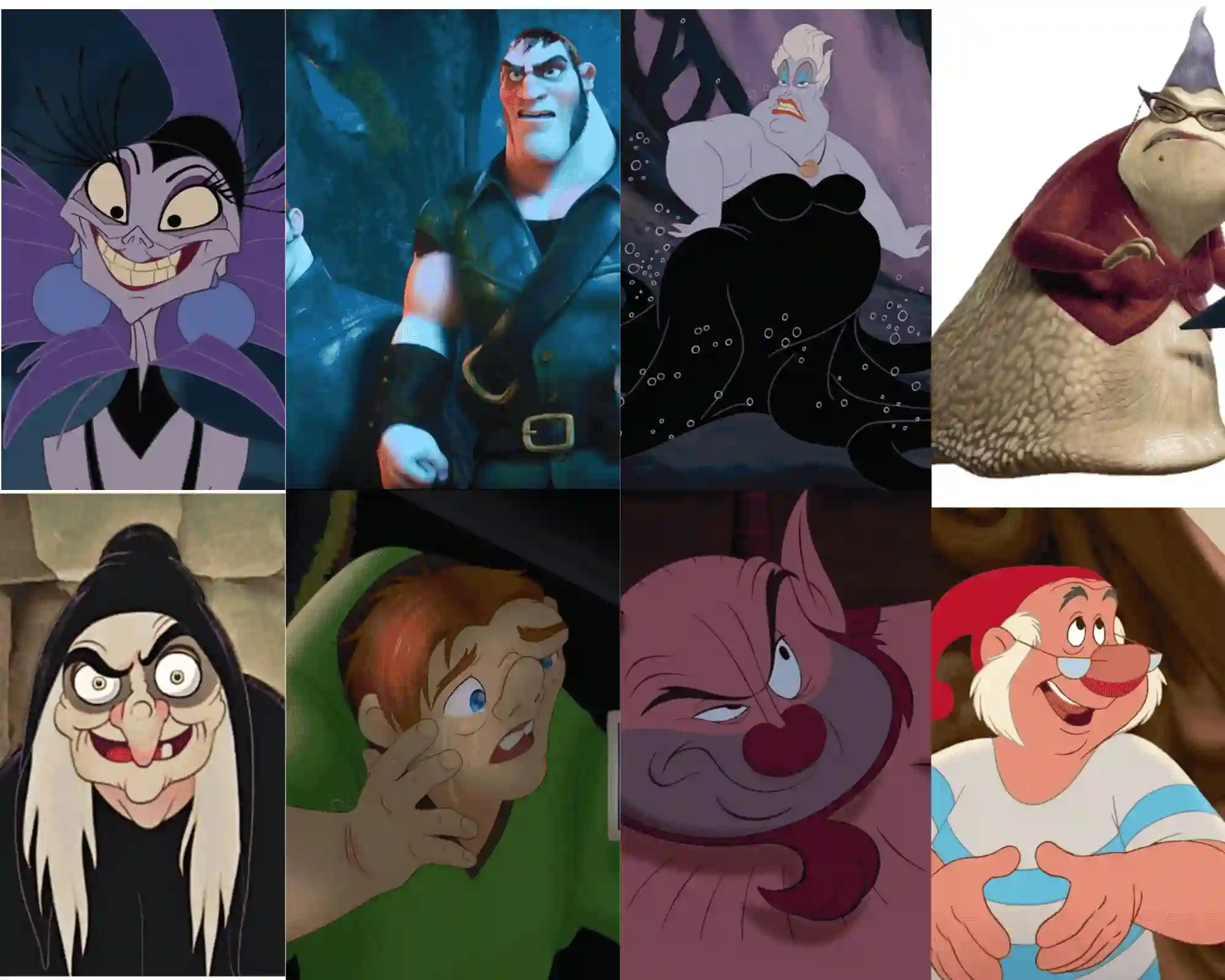
The Mouse is famous for its princesses and princes. However, the studio’s true genius lies in its embrace of “ugly Disney characters”.
READ MORE
May 6, 2026 .
Lists, MCU
Spider-Man is one of the many superheroes from the Marvel Universe whose stories shaped many childhoods. Who is your strongest Spiderman?
READ MORE

October 28, 2025 .
Debates, Lists, Marvel, MCU
Every Marvel hero brings something to the table. But if we had to pick the top 8 most popular Marvel superheroes, who would make the cut?
READ MORE
October 28, 2025 .
Lists, Marvel, MCU, Opinions
Let’s go through a list of the top 7 strongest Marvel villains, from the wickedly powerful to the absolutely unstoppable.
READ MORE


July 20, 2025 .
Opinions
Book recommendations from random places don’t always cut it, and you often end up feeling unsatisfied with them.
READ MORE

July 20, 2025 .
Essays, Opinions
READ MORE

July 20, 2025 .
Essays, Opinions
READ MORE

September 11, 2026 .
Opinions
Book reviews aren’t just a jumble of words on how a book made you feel but also a veritable document that you can quickly refer to when your memories temporarily fail you.
READ MORE

July 20, 2025 .
Opinions
Reading hundreds of pages for a single book can be like facing Smaug, Chiefest of Calamities, but a short story is a small dragon that you can easily conquer.
READ MORE

July 20, 2025 .
Debates, Opinions
Reading nonfiction about what interests you can provide more color and context that might make your fiction reading experience more enjoyable.
READ MORE
September 12, 2025 .
Opinions
In a fast-paced world, reading asks us to slow down, surrender, and sit with another person’s words long enough for them to settle inside us.
READ MORE

November 24, 2025 .
Debates, Opinions
Reading is active while watching movies is passive. The act of turning pages creates a pause that enhances understanding.
READ MORE
July 26, 2025 .
Fantasy, Opinions
It’s cliche. But it’s rapid. It’s predictable. But it’s enjoyable. For lovers of the classic tropes, Legend of the Seeker is a worthy watch.
READ MORE

Get our magazine for free!