



















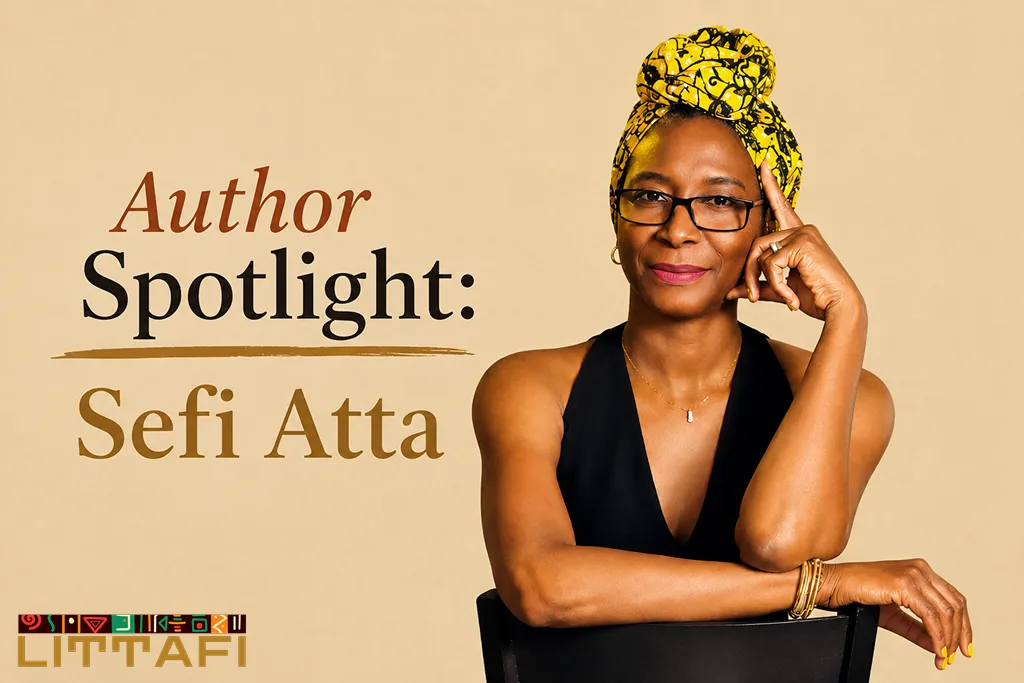









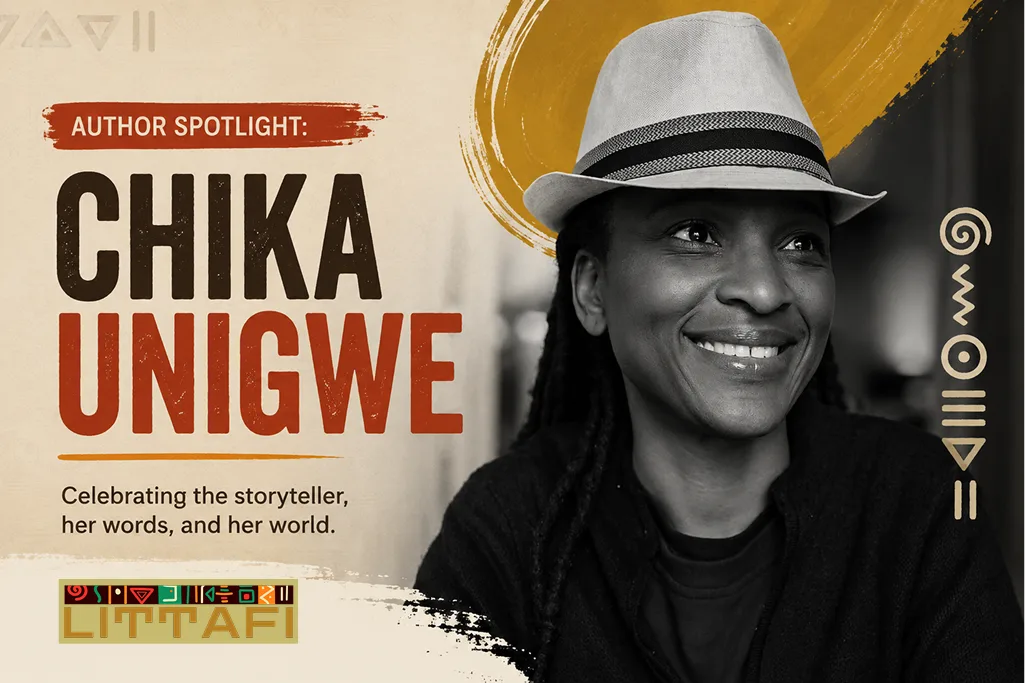


Sefi Atta turns everyday motions into something remarkable, stories that make you ask what parts of your own life you’ve been overlooking.
There are the writers that you read because everybody says they’re important. Then the writers you read and ask yourself, “Why didn’t I read him/her sooner?”
Sefi Atta is in the second group.
Her books don’t need big plots to hold your attention. A woman goes to work. Two friends talk. People get married. Someone leaves Nigeria. A person trying to make enough money to get by the month. Or someone trying to determine if the life they have created is the one they intended to live.
And somehow, it all becomes interesting. And it’s because Atta understands something about fiction that’s easy to overlook: ordinary life is not as ordinary as we think it is.
She turns everyday motions into something remarkable, stories that make you ask what parts of your own life you’ve been overlooking.
Welcome to Know Your Authors (KYA), a series that looks past individual books to understand the writers behind them. Some are just finding their audience. Others have spent years building a body of work worth returning to.
Today’s edition is about Sefi Atta.
Sefi Atta is a Nigerian novelist, short story writer, playwright, radio dramatist, and screenwriter.
She was born in 1964 in Lagos, studied and worked as an accountant, then became a writer.
Atta has an MFA in creative writing from Antioch University Los Angeles and published her first novel, Everything Good Will Come, in 2005. She’s acknowledged in interviews that, growing up, she wasn’t always the most well-behaved student.
Most writers are rebels in some sense; often, they need to go against societal expectations.
In 2006, her book won the first Wole Soyinka Prize for Literature in Africa, which catapulted Atta into the spotlight as a writer to follow in Nigeria.
Atta sometimes also mentors younger writers, and she sees those connections as essential rather than nice-to-have. It’s how the work actually gets made.
Sefi Atta has been writing for almost 20 years now.
The most interesting thing about her career is that she hasn’t been interested in fitting into just one type of story.
She’s an active writer, and her process reflects that too. When she’s drafting, she’s almost absent-minded. As soon as she enters research, she’s much more engaged, much more awake, and even has a uniform that makes it easier: black sweats, worn in like “It’s time to write.”
Her books’ settings swing between Lagos and the diaspora, between women trying to understand themselves, and women trying to live up to what’s expected of them. She writes about politics, but doesn’t make every story political. Atta doesn’t make all migrants symbols; she writes about migration.
Most of all, she gives her characters more than just a few wrinkles. They can be sympathetic and frustrating, right and wrong. They may love someone and still cause them pain.
This complexity is a large reason why her work is still relevant today. It also shows up on the page. She’s loud and clear about creating room in her work for the people who have been in her life, and, as a rule, the people who have been in her life create room for her in their work.
Despite all this, she tells me she’s a self-contained character, a rich and complicated character who doesn’t require much from the outside to get by.
If there’s one place to start with Atta’s writing, it’s her women. Not because every story is exclusively about women, but because she’s especially good at showing the many negotiations that make up a woman’s life.
In Everything Good Will Come, a coming-of-age story, Enitan Taiwo grows from childhood into adulthood as she navigates friendship, family, marriage, politics, and her own sense of independence. Her friendship with Sheri matters because neither woman is reduced to “good” or “bad.” They make different choices and want different things. Their lives go in different directions, and Atta is adept at pulling this off.
She’s not particularly interested in female characters who exist to prove a point about womanhood. She gives them personalities first; they may be ambitious, petty, funny, selfish, loving, difficult. Sometimes they possess all the traits, depending on the chapter.
Atta’s Lagos is also worth paying attention to. You can tell she has a relationship with the place.
It isn’t the glossy Lagos of restaurants, nightlife, and Instagram captions. But it’s not a city shown entirely through poverty and dysfunction either. It’s simply a place where people live—vintage, nostalgic, and familiar.
Her characters go to offices, worry about money, gossip, fall in love, make plans, complain about the government. They think about leaving, but also think about coming back.
In Swallow, Atta takes us into 1980s Lagos, where Tolani works in a bank during a stretch of economic hardship. When her roommate Rose introduces her to the idea of drug trafficking, the decision becomes about more than money.
Tolani isn’t a caricature of desperation; she’s a woman trying to figure out how far she’s willing to go when the respectable options aren’t giving her the life she wants.
Sefi Atta doesn’t always tell you what to think about her characters. She lets you watch them choose and grow with them.
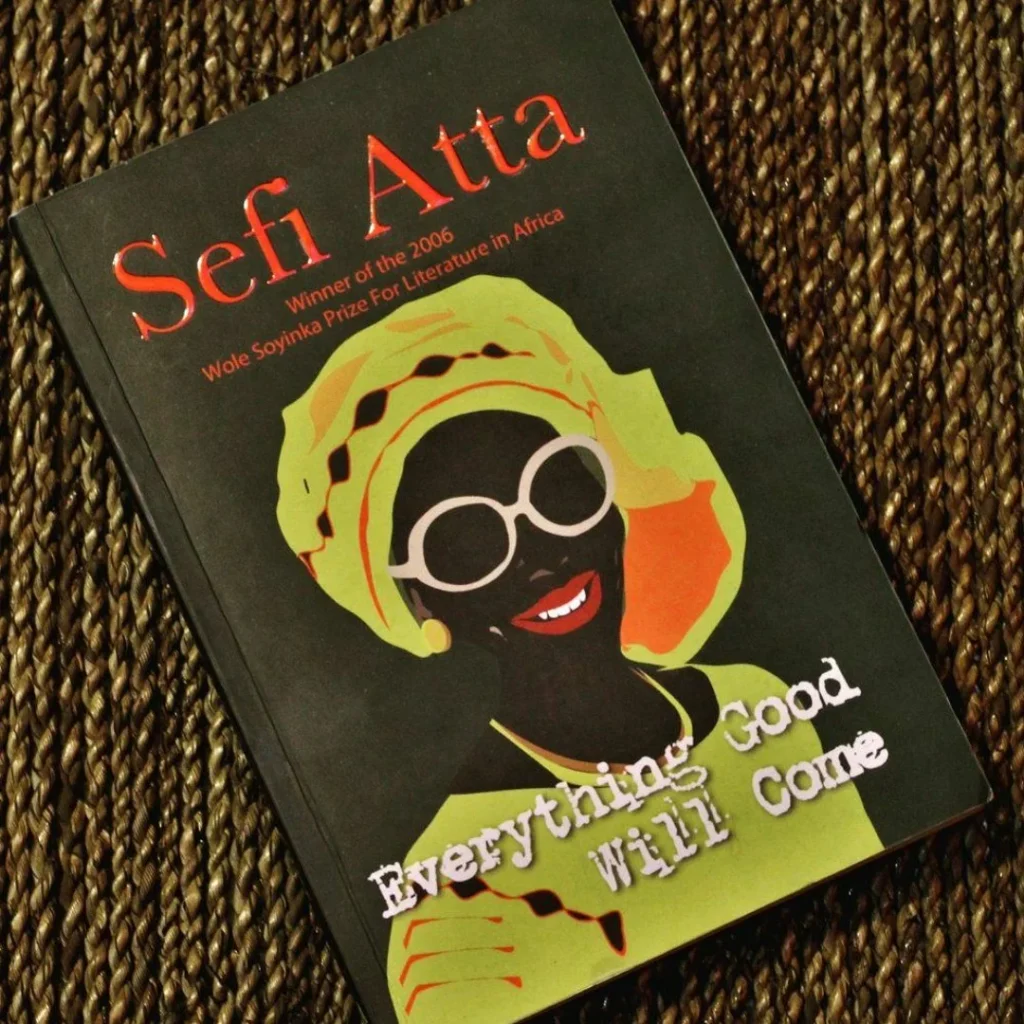
Everything Good Will Come is probably the best place to start if you’re new to Sefi Atta.
It’s a coming-of-age story, refreshing in places and jarring in others. At its center is Enitan, but the novel also cares about the Nigeria around her.
Military regimes, family expectations, religion, gender, changing ideas about independence—all of it shapes the life she’s trying to build.
What makes the book work isn’t just that these are big subjects. It’s that they’re experienced through a person.
Enitan isn’t walking around thinking about “the Nigerian political condition.” She’s thinking about her life, and we can observe how Nigeria shapes or limits her options.
The political becomes personal because that’s how most people actually live. Politics shows up in what they can afford, through who holds power in their family, through what women are allowed to do, through the opportunities they have and the ones they don’t.
Atta gets this without turning her characters into mouthpieces. She uses conflict in their lives to comment on the themes that interest her, and she does it elegantly.
One thing people often miss when they talk about Sefi Atta is how wide her body of work runs.
She’s published short-story collections including News from Home and Indigene, which explores the dangers and impact of globalization, the need to succeed globally, and identity politics. Atta uses her work to challenge these. She’s also written plays and radio dramas, and worked on screenplays.
Her short fiction is worth exploring on its own, especially for how she handles different characters and points of view; there’s something fitting about her range.
Atta’s stories have always cared about people in motion between countries, relationships, and between versions of themselves. The shorter form just gives her more room to catch those moments.
Sefi Atta isn’t a writer I’d recommend because her books are easy.
I’d recommend her because they make you pay attention.
Pay attention to the woman sitting beside you. To the friend whose choices you don’t understand, the person who wants to leave, and the person who desperately wants to come home. To the small decisions that eventually add up to a life.
And maybe that’s what makes her work so valuable in contemporary African literature. Atta doesn’t need to make her characters extraordinary to make them worth reading about.
She just pays attention.
Are you new to Sefi Atta? Then start with Everything Good Will Come.
Want something set in the economic hardship and pressure of 1980s Lagos? Pick up Swallow.
For short fiction, try News from Home.
And if migration, identity, and belonging are what draw you in, A Bit of Difference is worth adding to the list.
Sefi Atta is a Nigerian writer who turns the details of ordinary lives — work, friendship, family, money, love, the desire for somewhere better — into stories that quietly ask much bigger questions.

Hi I'm Tega, I am a microbiologist with a lifelong passion for reading, I fell in love with books as child (where I was briefly obsessed with Enid Blyton, lol) reading is simply my escape and hobby and sometimes doubles as therapy for me . My favorite genres are African lit, historical fiction, memoirs/biographies and fantasy. I do beta reading and post book reviews which you can check out on my Instagram @ te_ga_o.
July 20, 2025 .
Animation, Lists
Our list rounds up the top 30 cartoon characters that were villains, each one more wonderfully wicked than the last.
READ MORE
April 29, 2026 .
Lists, Opinions
The Mouse is famous for its princesses and princes. However, the studio’s true genius lies in its embrace of “ugly Disney characters”.
READ MORE
May 6, 2026 .
Lists, MCU
Spider-Man is one of the many superheroes from the Marvel Universe whose stories shaped many childhoods. Who is your strongest Spiderman?
READ MORE
October 28, 2025 .
Debates, Lists, Marvel, MCU
Every Marvel hero brings something to the table. But if we had to pick the top 8 most popular Marvel superheroes, who would make the cut?
READ MORE
October 28, 2025 .
Lists, Marvel, MCU, Opinions
Let’s go through a list of the top 7 strongest Marvel villains, from the wickedly powerful to the absolutely unstoppable.
READ MORE

July 20, 2025 .
Writer Resources
Discover the differences in First-Person Point of View and Third-Person POV, and how each impacts character connection and narrative style.
READ MORE
May 15, 2026 .
Writer Resources
The tension between writer-centered and reader-centered approaches defines how a story is told and who it serves.
READ MORE

October 22, 2025 .
Essays, Writer Resources
Ever found a book that looks like a comic but tells a complete, well-structured story? Congratulations, it’s a graphic novel.
READ MORE
June 26, 2026 .
Writer Resources
Writing starts with forming ideas, imagination, dreams, and thoughts. And when these condense into a coherent progression, you have a plot.
READ MORE
May 10, 2026 .
Writer Resources
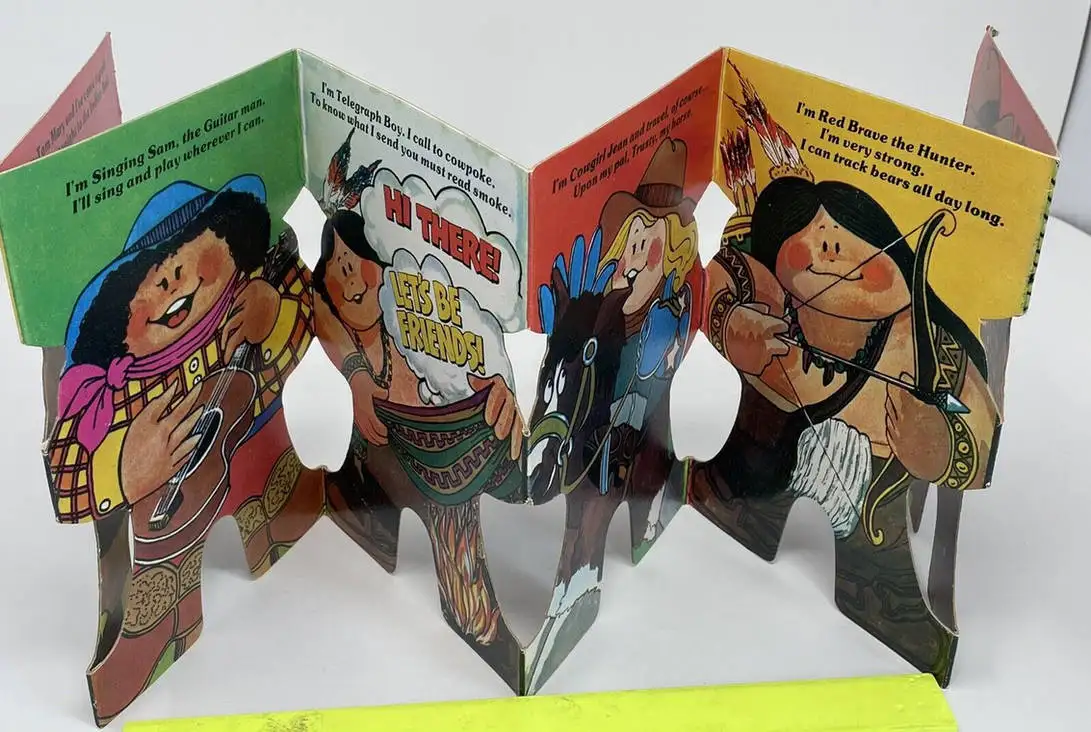
What is a board book, and how does it differ from others? Traditional publishing usually means novels, but published works span much more.
READ MORE
July 24, 2025 .
Essays, Writer Resources
READ MORE
February 8, 2026 .
Writer Resources
Breaking into traditional publishing can feel like decoding a secretive industry. This guide is a resource for finding the right agent.
READ MORE
February 28, 2026 .
Writer Resources
There are three paths in book publishing: traditional, self-publishing, and hybrid. The current focus is on traditional publishing.
READ MORE

July 20, 2025 .
Writer Resources
Today, writers are needed who combine creativity with technical expertise, professionalism, and adaptability.
READ MORE
Get our magazine for free!