
Menu



































Buchi Emecheta went from an orphaned girl in Lagos to a librarian, sociologist, novelist, lecturer, and internationally recognised writer.
Welcome to KYA, Know Your Authors, a series about the writers behind the books we read, quote, recommend, and sometimes argue about. We want to go beyond the familiar author bio and look at the people, experiences, ideas, and circumstances that shaped their work.
Because sometimes, knowing the writer changes the way you read the book.
This week, we are looking at Buchi Emecheta, a writer whose fiction kept returning to women, family, education, migration, and the social changes reshaping African life.
If you have read The Joys of Motherhood, you already know Emecheta was interested in more than whether women were oppressed. Her body of work examined what happens when the society around a woman changes, but its expectations of her do not.
Buchi Emecheta knew early that education could change the course of a girl’s life. She also knew that being educated did not automatically free a woman from the expectations placed on her.
This imbalance is at the core of much of her writing.
Born Florence Onyebuchi Emecheta in Lagos on 21 July 1944, Emecheta came from an Igbo family from Ibusa in present-day Delta State. Her father, Jeremy Nwabudinke Emecheta, worked for the railway. Her mother, Alice, had no formal education.
The family had limited resources, and at first, they saw education as more important for her brother than for her. However, Buchi resisted that arrangement.
She eventually received a scholarship to Methodist Girls’ High School in Yaba, Lagos. Her father died when she was still a child, and her mother died a few years later. By her teenage years, Buchi had lost both parents.
Books became one of the primary ways she imagined a different life.
At sixteen, she married Sylvester Onwordi. In 1962, she followed him to London. By the age of twenty-two, she was raising five children and living as a single mother after the marriage broke down. She worked, studied sociology at the University of London, and wrote.
The circumstances surrounding those years became material for her fiction.
Buchi Emecheta’s first novel, In the Ditch, appeared in 1972 after some of its episodes had first been published in The New Statesman. It drew heavily from her experiences as a poor Nigerian immigrant and single mother dealing with London’s welfare system.
Second-Class Citizen followed in 1974 and developed many of the same experiences through Adah, a Nigerian woman determined to become educated and become a writer.
These books gave Emecheta her first major literary visibility.
But The Slave Girl brought her an important early prize. Published in 1977, it won the 1979 New Statesman Jock Campbell Award for Commonwealth Writers. By then, Emecheta had established a literary territory that she would continue to explore for decades: African women, family, marriage, motherhood, education, migration, poverty, racism and the collision between inherited traditions and changing social conditions.
One of the most useful ways to understand Emecheta is to listen to how she described her own writing.
Buchi did not see herself as a writer who needed to announce grand theories. In a published primary-source statement, she explained:
“I don’t deal with great ideological issues. I write about the little happenings of everyday life.”
That approach explains much of her fiction.
A woman selling food on the street. Another worrying about school fees. A girl fighting to remain in school. Someone’s husband returning home from work. A family negotiating marriage, or a woman trying to survive in a foreign city.
Emecheta took these ordinary situations seriously because social change often becomes visible through them.
She also connected her storytelling to the oral tradition she grew up around. She once compared her work to that of her “Big Mother”, who told stories in the moonlight. Emecheta joked that the difference was that she had to tell hers on a typewriter in London.
That influence shows in her accessible prose. She favoured storytelling over literary performance. Her novels often feel close to spoken narration, with everyday conversations, family disputes, humour and observations about ordinary life.
Her son Sylvester Onwordi later described this quality in Second-Class Citizen as her “candid writing style” combined with African humour and an outsider’s perspective.
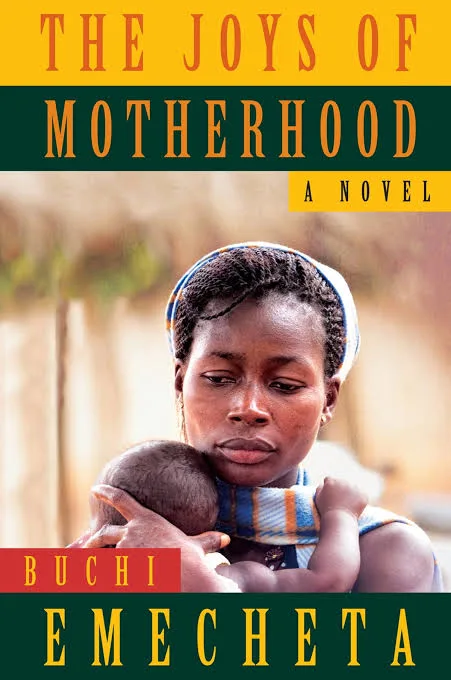
This is where The Joys of Motherhood becomes especially important.
Published in 1979, the novel follows Nnu Ego, an Igbo woman whose understanding of womanhood is closely tied to motherhood, children, and her position in her community.
At first, the system seems to make sense.
In Ibuza, Nnu Ego’s agricultural work and the wider communal economy give motherhood a social and economic context. Women produce and exchange goods. Kinship provides forms of support. Children are part of a wider family structure.
Then she moves to colonial Lagos. The same expectations follow her, but the economic system has changed.
Nnu Ego is still expected to have children and fulfill the duties of a traditional wife. Yet the urban colonial economy does not give her the land or communal economic structures that helped make those expectations sustainable in Ibuza.
She has rent to pay. Food costs money. Her husband works within the colonial economy. Her children need education.
The result is a painful contradiction. Society still demands the traditional role of the woman, while the material conditions that once supported that role have changed.
One scholar describes this as the destructive effect of a new capitalist system on Nnu Ego’s traditional role as wife and mother. In Ibuza, her agricultural production could sustain her family. In Lagos, she becomes economically dependent and increasingly isolated.
This is why reading Emecheta simply as a writer of “women’s oppression” misses something important.
She was interested in how societies change, and who bears the cost.
Colonialism appears in her work not only through British officials or political events. You see it in wages, housing, education, migration, work, family structures, and the changing meaning of success.
The young person who leaves the village for education may gain opportunities. The family may gain money. But the same movement can weaken older communal relationships.
Emecheta repeatedly returned to this tension between individual advancement and communal responsibility.
Emecheta’s criticism of colonial modernity did not mean she believed precolonial society was perfect. She may have admired it, but she also acknowledged its weaknesses.
This is one reason her work still feels relevant.
In The Joys of Motherhood, traditional Igbo society gives women certain forms of communal support, but it also places heavy demands on them. Nnu Ego’s worth becomes tied to fertility. Marriage carries economic and social expectations. Daughters can be treated differently from sons.
Emecheta therefore places two systems side by side without turning either into a simple answer.
Colonial Lagos creates new forms of economic hardship and isolation.
Traditional society creates its own restrictions.
Her women have to negotiate both.
This is also why her views on feminism were more complicated than the label often suggests. In a 1980 interview, when asked about being called a feminist, Emecheta described herself as “a feminist with a small ‘f’.” She wanted women to have choices, education and independence, but she did not believe African women’s lives should be interpreted entirely through Western feminist assumptions.
At another point, she explained her position more directly:
“Being a woman, and African born, I see things through an African woman’s eyes.”
She said she wrote about families because she believed in families and about women who tried to hold their families together until doing so became impossible.
That position helps explain why her female characters rarely exist outside their families and communities. Their struggles are personal, but they are also social.
Education was personal for Emecheta.
She had fought for it herself and had experienced the freedom it gave. It became a recurring route towards independence in her fiction.
Adah in Second-Class Citizen wants an education and dreams of becoming a writer. In The Joys of Motherhood, education becomes part of the changing expectations around children and family. Across her work, girls and women repeatedly confront systems that decide what they are allowed to learn, earn, or become.
Emecheta was explicit about this.
She once reiterated the words of Dr. James Emmanuel Kwegyir-Aggrey :
“If one educates a woman, one educates a community.”
It was not an abstract belief. Her own education had changed what was possible for her.
Buchi Emecheta went from an orphaned girl in Lagos to a librarian, sociologist, novelist, lecturer, and internationally recognised writer. She published more than twenty books and later taught at universities including the University of Calabar, Yale and the University of London.
Her writing also crossed categories. She wrote novels, children’s books, plays and autobiography. Much of it drew on her own experiences, but she transformed them into stories about wider societal conditions.
Perhaps the most revealing thing about Emecheta is that she did not begin with the intention of becoming a symbol.
She began by recording life.
A girl who wanted an education.
A young mother trying to survive London.
Women trying to hold families together.
Communities adjusting to colonial rule and urbanisation.
Traditional expectations meeting new economic realities.
And women discovering that survival sometimes requires them to question the very rules they were taught to respect.
That is why Buchi Emecheta’s work still gives us so much to discuss today. She understood that history does not happen only in parliaments or during wars. You can feel an entire society changing in the kitchen, at the market, in a classroom, inside a marriage, or in the decisions a mother makes for her children.

Hi I'm Tega, I am a microbiologist with a lifelong passion for reading, I fell in love with books as child (where I was briefly obsessed with Enid Blyton, lol) reading is simply my escape and hobby and sometimes doubles as therapy for me . My favorite genres are African lit, historical fiction, memoirs/biographies and fantasy. I do beta reading and post book reviews which you can check out on my Instagram @ te_ga_o.
The Author’s Guide to the Rule of Three II
10 Coolest Swords in History and Fantasy
Marvel vs. DC Female Superheroes
The Author’s Guide to the Rule of Three I
15 Writing-Adjacent Careers for Writers Looking for a Career Change
Authors Spotlight: Khaled Hosseini
The Sound Souls Make When They Die by Chinemefun Chimuanya
If Nollywood Cast Our Favourite African Books: Who Would Play Who?
Best Films About Unexpected Age Gap Romance
Literary Awards and the Racism Card: A Wake-Up Call for Black Africa
Interview with the Vampire Relationships, Ranked
10 Top Recent Films for Action and Comedy Fans
July 20, 2025 .
Animation, Lists
Our list rounds up the top 30 cartoon characters that were villains, each one more wonderfully wicked than the last.
READ MORE
April 29, 2026 .
Lists, Opinions
The Mouse is famous for its princesses and princes. However, the studio’s true genius lies in its embrace of “ugly Disney characters”.
READ MORE

November 27, 2025 .
Lists, Mythology
While this isn’t an exhaustive list, it comprises some of the most popular mythical creatures from around the world.
READ MORE
May 6, 2026 .
Lists, MCU
Spider-Man is one of the many superheroes from the Marvel Universe whose stories shaped many childhoods. Who is your strongest Spiderman?
READ MORE
February 26, 2026 .
Cartoons, Lists
There are some outright funny cartoon characters who exist solely to crack you up, loud, hard, and with zero apology.
READ MORE

July 20, 2025 .
Writer Resources
Discover the differences in First-Person Point of View and Third-Person POV, and how each impacts character connection and narrative style.
READ MORE
May 15, 2026 .
Writer Resources
The tension between writer-centered and reader-centered approaches defines how a story is told and who it serves.
READ MORE

October 22, 2025 .
Essays, Writer Resources
Ever found a book that looks like a comic but tells a complete, well-structured story? Congratulations, it’s a graphic novel.
READ MORE
June 26, 2026 .
Writer Resources
Writing starts with forming ideas, imagination, dreams, and thoughts. And when these condense into a coherent progression, you have a plot.
READ MORE
May 10, 2026 .
Writer Resources
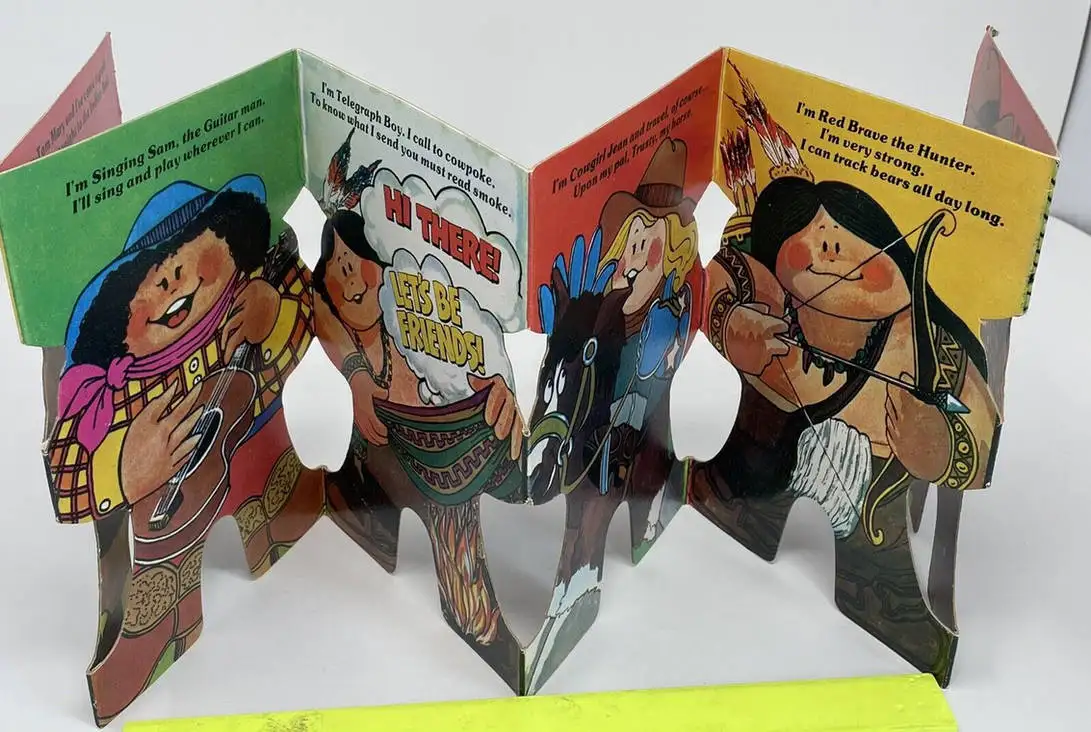
What is a board book, and how does it differ from others? Traditional publishing usually means novels, but published works span much more.
READ MORE

July 24, 2025 .
Essays, Writer Resources
READ MORE
February 8, 2026 .
Writer Resources
Breaking into traditional publishing can feel like decoding a secretive industry. This guide is a resource for finding the right agent.
READ MORE
February 28, 2026 .
Writer Resources
There are three paths in book publishing: traditional, self-publishing, and hybrid. The current focus is on traditional publishing.
READ MORE

July 20, 2025 .
Writer Resources
Today, writers are needed who combine creativity with technical expertise, professionalism, and adaptability.
READ MORE
Get our magazine for free!