
Menu

























Following a clear, tested, tried-and-true formula makes the writing process less daunting. Without further ado, the beat sheet.
Writing, at any level, isn’t easy. Think of the 500-word essays many can’t keep up with, or the projects and theses many university students famously take extra years to finish.
Now apply that logic to a 200-500 page novel or screenplay that has to be compelling, multi-layered, cohesive, and unique, without filler information.
With multiple rounds of brainstorming, revisions, editing, and rejections, it is tempting to give up. However, there is a solution.
On one level, there is a groundbreaking innovation called Save the Cat! The Last Book on Screenwriting You’ll Ever Need by Blake Snyder.
The narrative introduces a fifteen-beat plot sheet for 10 standard genres for screenplays and film structure. Synder’s authority comes from experience working on multiple million-dollar scripts.
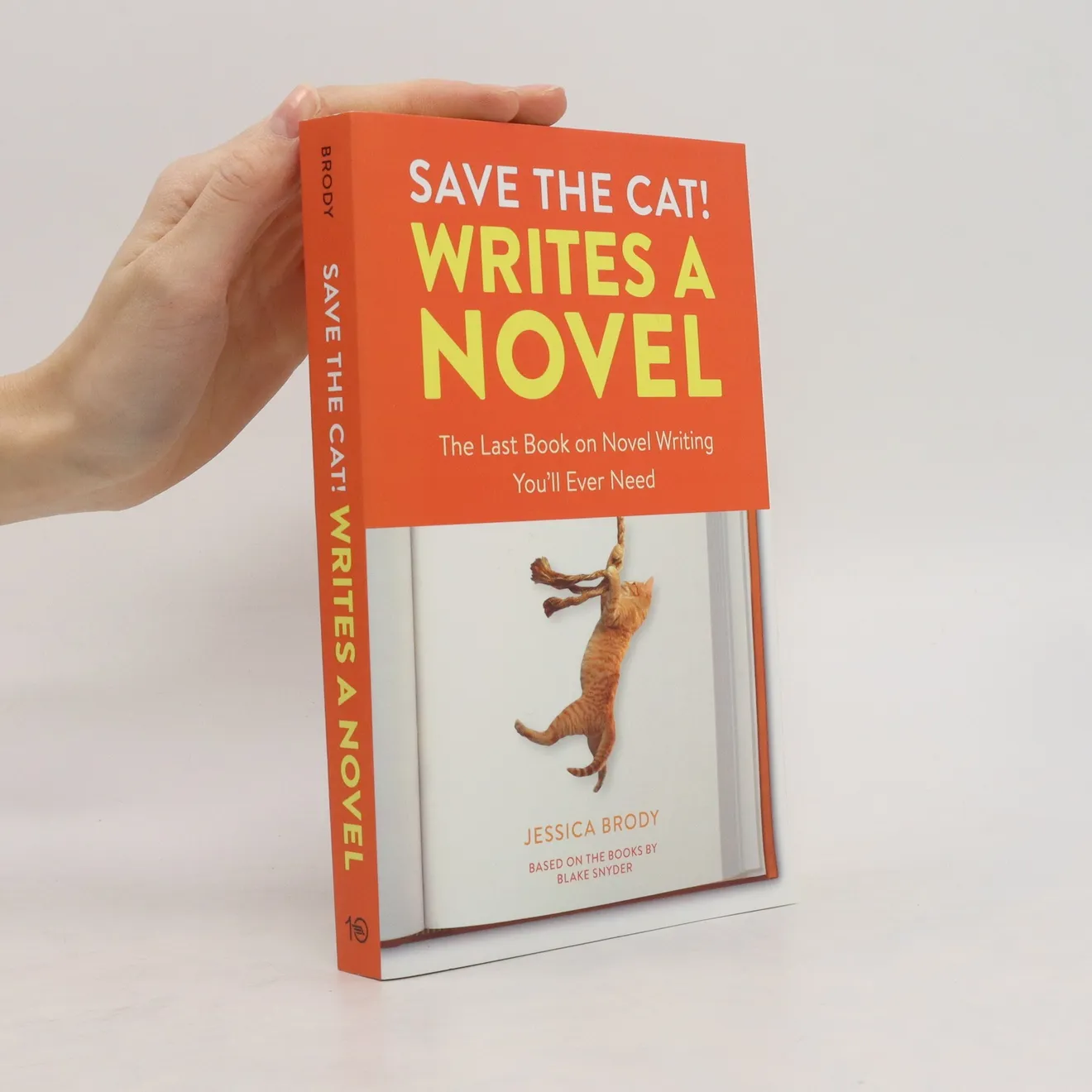
The novelists got their own version with Save the Cat! Writes a Novel: The Last Book On Novel Writing You’ll Ever Need by Jessica Brody.
This variation similarly highlights a 15-beat plot structure, dubbed the “beat sheet”, with three acts, starting with a general format, then introducing ten universal genres and how the beat sheet plays out.
Writing has many troubles, but following a clear, tested, tried-and-true formula makes the process less daunting. Without further ado, the beat sheet.
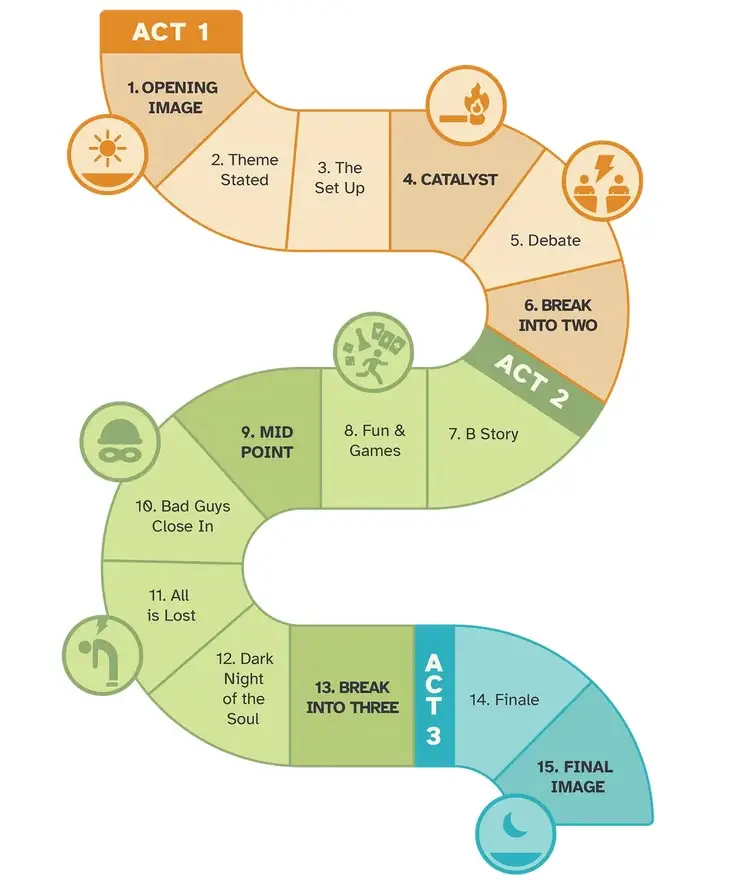
A successful beat sheet should contain the following key elements

The first step is an introduction that presents the protagonist’s flawed normal world, establishes the core theme and stakes, and ends with a life-changing catalyst and a definitive choice to step into the unknown.
The opening image is the first look into the main character (s) and their world. The opening image should convince the reader that the well-invested book they hold is worth their time.
If the book intends to be sad, build suspense, or spark curiosity, the introduction should tell the reader what they are getting into.
The opening image should also be a single-scene beat, containing one piece of information. This focus establishes a clear scenario, prioritizes emotional attention, and acts as a thematic compass.
The theme stated should be a statement from a non-main character that points to their arc.
This statement should be harmless and non-threatening, and it should only come back when the mentioned event finally happens.
By the climax or resolution, that supporting character must live out the exact words they spoke, proving the story’s theme through their actions.
At this point, the reader should get a sense of what the hero’s life looks like.
Supporting characters can make a subtle entrance here. These wonderful introductions are the A Story characters.
Now the scenes can follow multiple beats. This is time for an informative, relevant information dump.
This area should answer questions like: Who is the hero? What defines them? How do they spend their days? Why does it matter? What are the stakes?
The Catalyst is, in simpler words, the drama.
This is where the incident has either traumatised, radicalised, or pushed the hero into a new line of thinking.
It needs to be so destabilizing that the hero cannot even think of going back to their old ways.
This is essentially a much-needed reality check. Again, if an author is against trauma porn, they can dress it up in a way that doesn’t trigger negative emotions in readers.
If a story is going according to plan, the character(s) should be thinking about what is next.
Usually, it comes in the form of “Do I need to take this step?” because even though the character has gone through a painful experience, they are still stubborn and reluctant to change.

The next step is the expansive “middle” of the story where the protagonist enters an unfamiliar world, tries flawed plans to solve their core problem, and faces escalating failures and consequences that force them to grow.
Here, our main character (s) decide to take a decisive step to resolve what the catalyst pushed them to do.
In true one-track-mind nature, they go about this change the wrong way. They internally know it is wrong, but keep going because at least they are doing something and it eases their conscience.
The B story involves introducing the helper characters, so to speak.
This is a person who helps aids the hero learn the life lesson they need to grow, either through direct actions or inspiration.
Usually these characters are fresh, so they haven’t been part of the main character’s life yet.
It is easy to use an existing A-story character in the B story, but if they were already in their life, wouldn’t the main character have learnt their lesson already?
In Fun and Games, the hero is in their new world, either enjoying or loathing it.
Here, it seems like whatever decision they made has led to new experiences and a new outlook on life. This is the novel’s hook, so it has to convince the reader.
All good, or bad, things must come to an end.
Here, the main character who has evidently been through a lot experiences a false win or victory.
This section should align with the fun and games. For instance, a character who made a big change and was, by all indications, blossoming faces a low that disrupts their illusion because, if you recall, they changed the wrong way, so they still haven’t learnt their lesson.
The midpoint is essentially saying “Nice try, but there’s more to learn”
For context, this beat is named after the part in major productions where the bad guys come back even stronger and more dangerous.
Here, the main character(s) face the lesson they need to learn, and their life gets progressively worse.
The “bad guys” can be internal or external, but the character still faces issues because they haven’t resolved their core issue.
The main character(s) should buckle up because rock bottom has a basement.
In All is Lost, the main character(s) have hit the hypothetical basement.
All their “safety nets” and delusions are gone. At this point, they have lost everything, and it is truly heartbreaking.
Please don’t play safe in this section; really break your hero’s heart in a way that makes the Catalyst look like a joke.
They need to be at nothing to move to the next beat.
Depending on the nature of the lead character, this is the point they cry in bed for days and binge on alcohol (if they are drinkers) or ice cream—preferably cheap yoghurt, given the economy.
In Dark Night of Soul, they wallow. “Wallow” could mean bouts of anxiety, anger, silence, or denial.
If possible, they return to their ‘before’, but it doesn’t feel normal anymore because, despite their wrong approach to fixing things, they have changed.
Now, they have no choice but to finally make the right decision.

Lastly, the resolution shows how the protagonist has permanently changed.
Here, the well-deserved fix appears. After the main character(s) go through unspeakable things, they finally know what to do right.
It’s almost a silent, humbling reaction: they realize they were the problem and don’t want to be anymore.
In the final image, it takes the stop to resolve the problem in Act 2.
Here’s the tricky part- the finale has to be somewhat lengthy.
Authors can achieve this by extending the journey to the solution: plan how to execute it, execute it, hit a small hurdle that makes the solution ineffective, regroup and try again differently, then execute the new plan successfully.
The final image is an “after” snapshot of the main character.
It should show how far the main character(s) look like now that they have learnt what they finally have to.
It should mirror the opening image in similar settings or situations where the reader first met the main character, but better.
Please note: The goal isn’t to follow the beat sheet rigidly, but to use it in a way that best fits the nature of the draft.
Below are some Brody-approved ways to cross-check if the beats are on the right path.
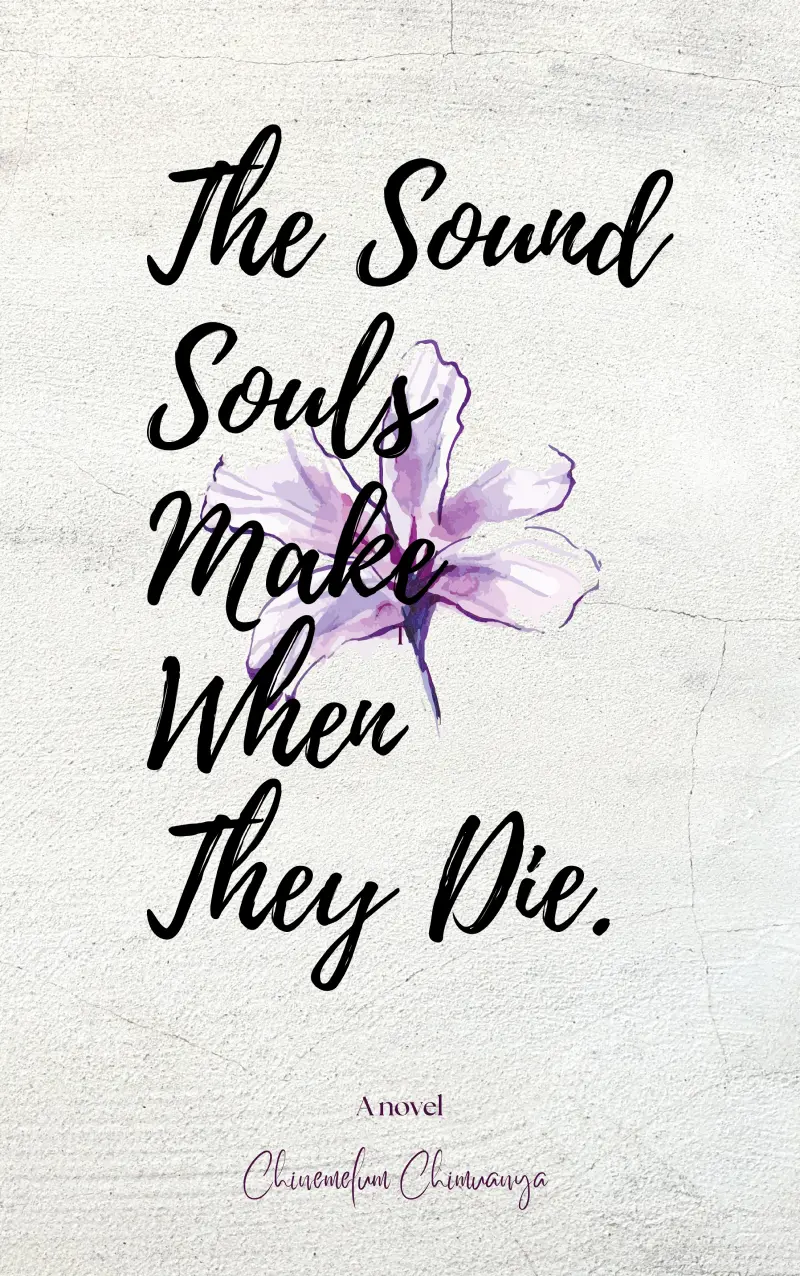
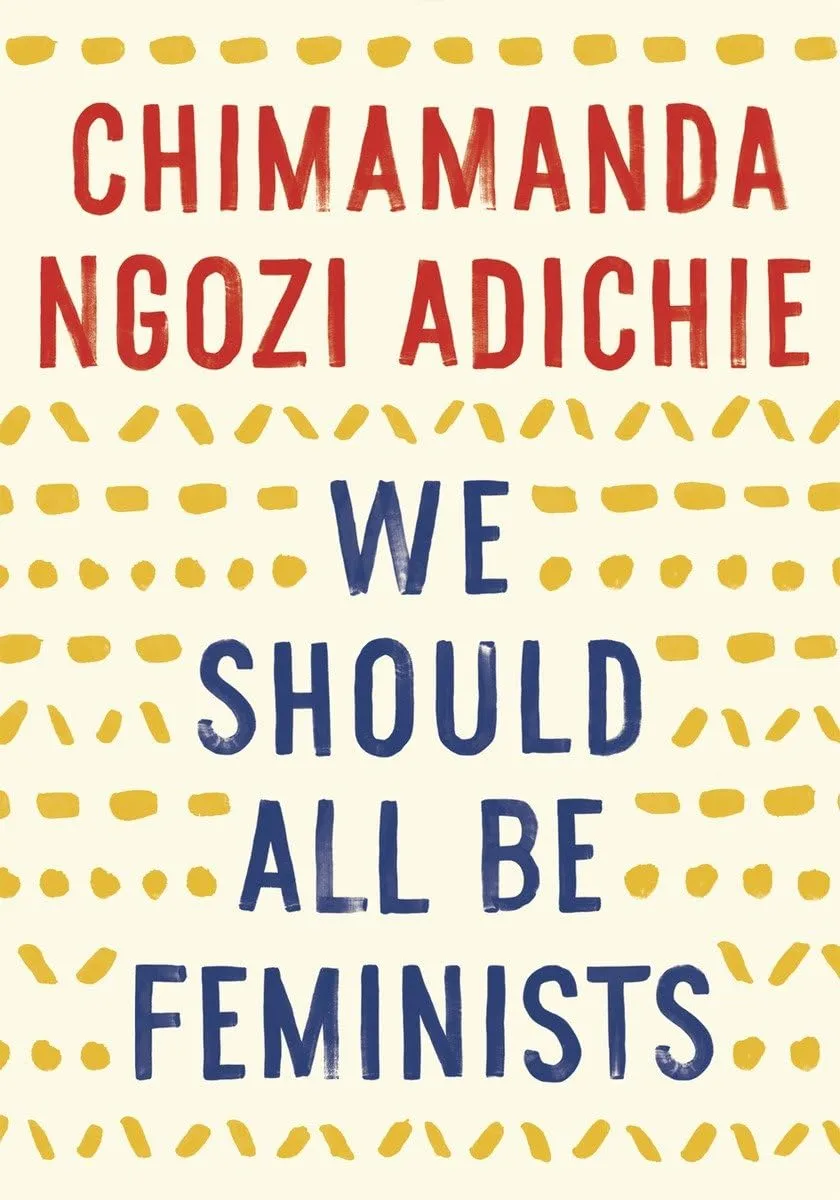
To exemplify the beat sheet, a suitable example is Chimamanda Ngozi Adichie’s iconic Purple Hibiscus.
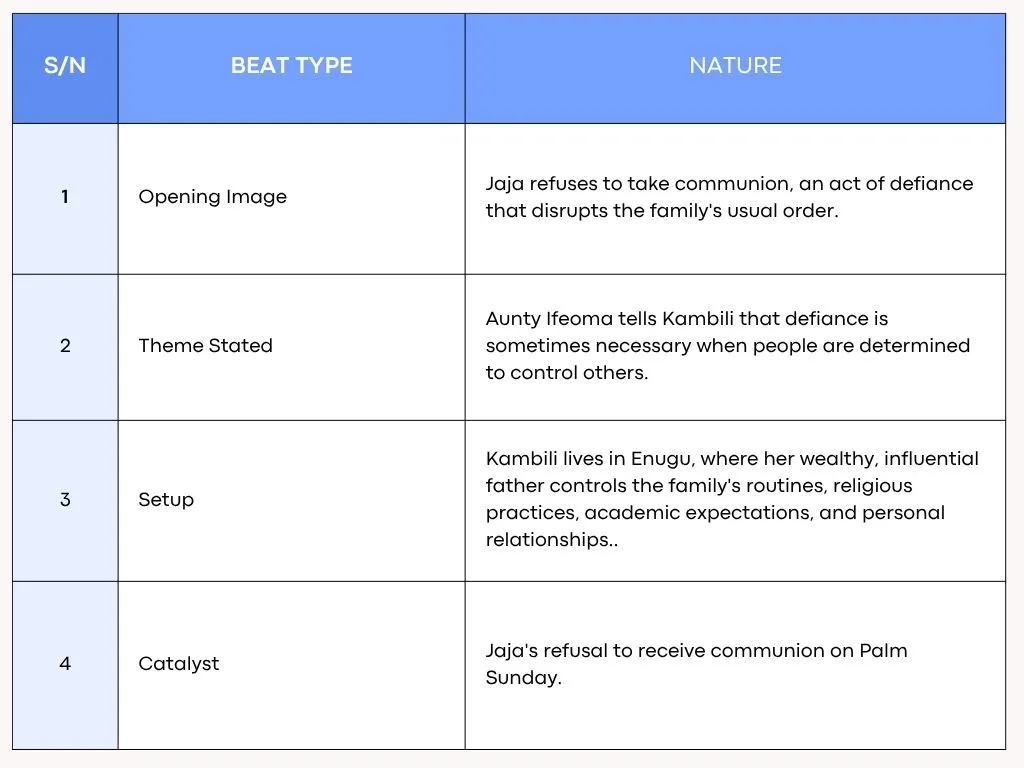
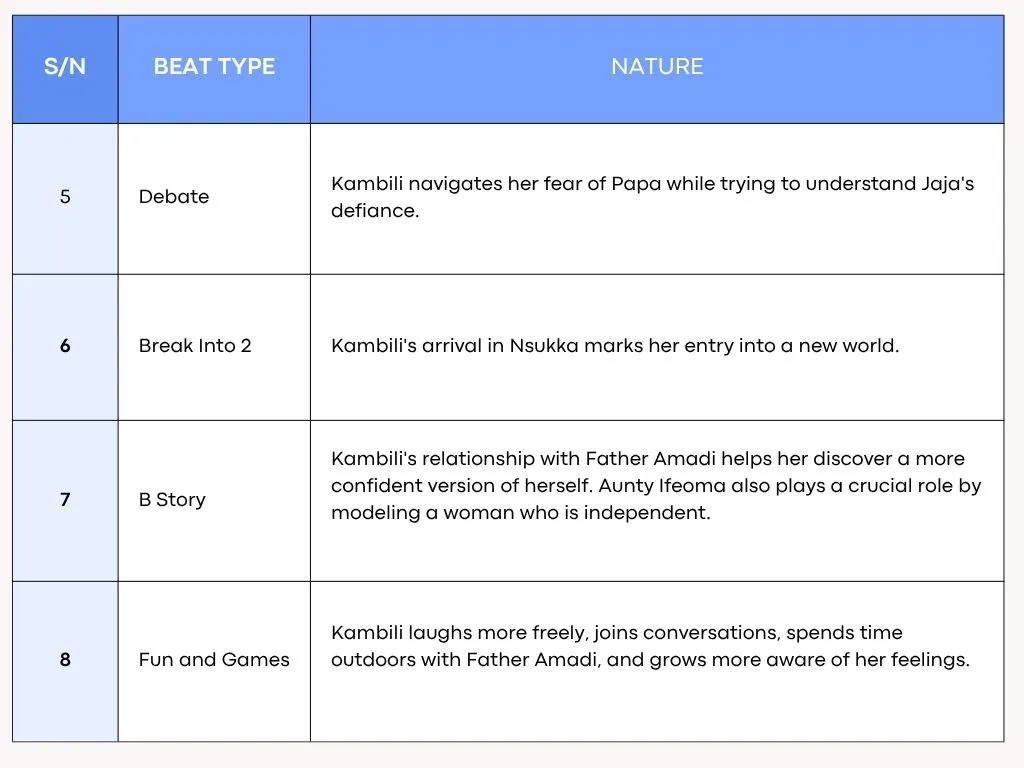
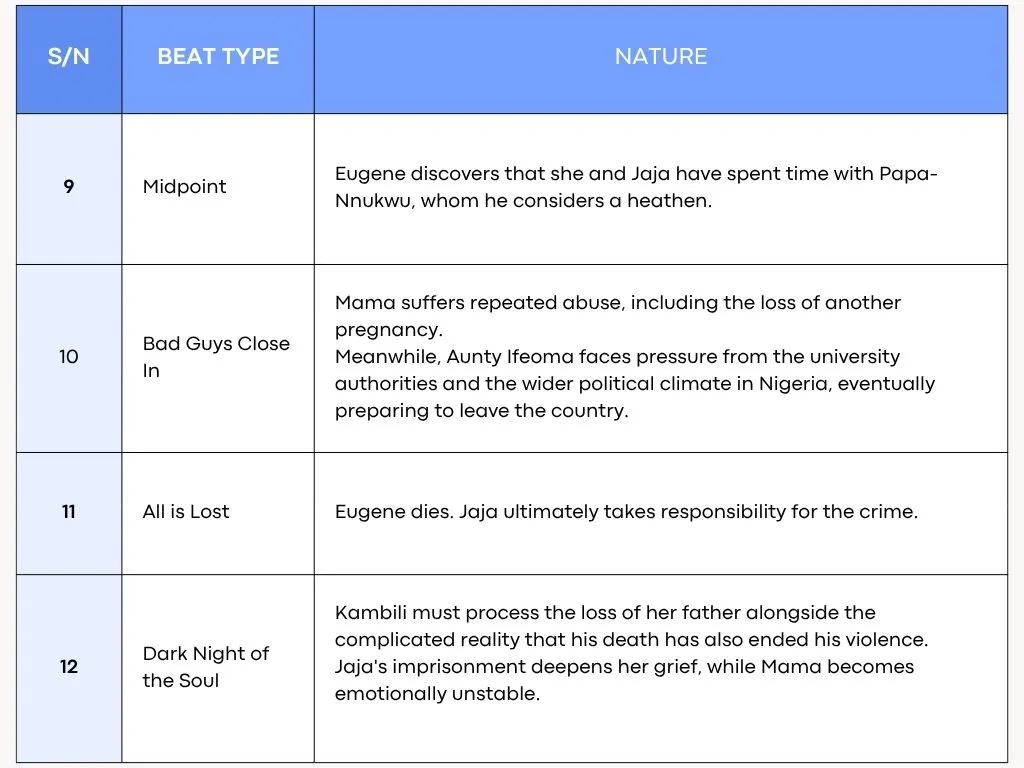
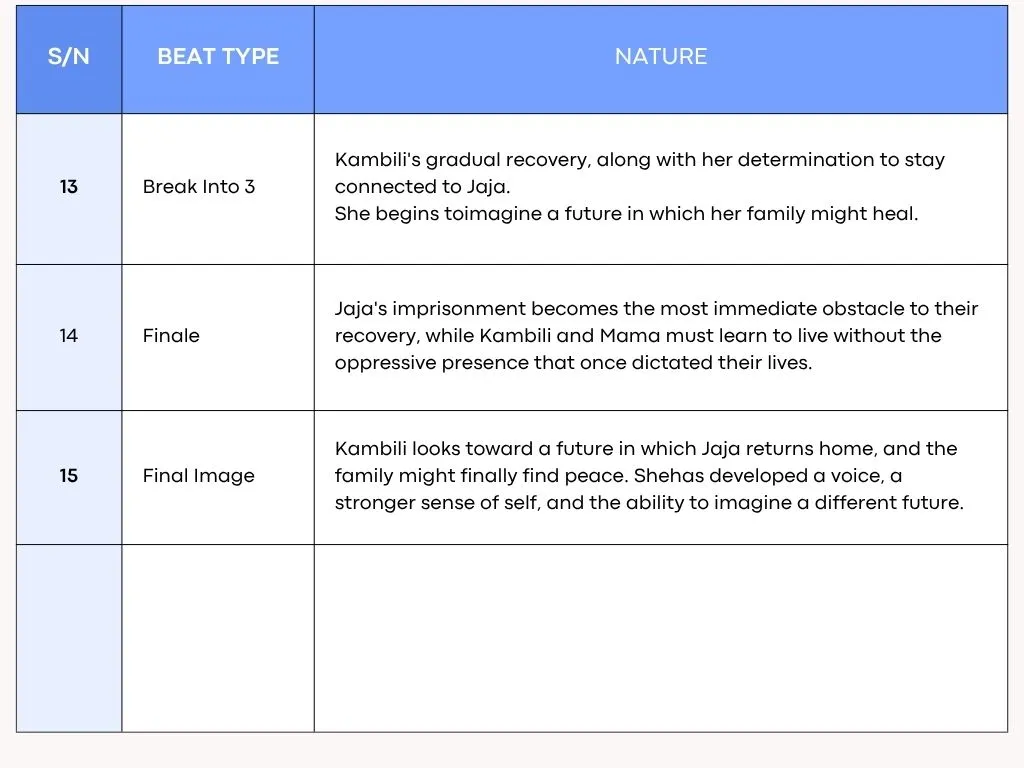

The above structure is for general use, but Save the Cat! has specific genres, including sub-categories:
Save the Cat! explains these genres with their custom beat sheets.
Before any high-level drafting, it is imperative to understand the type of characters the reader wants to see.
Some Save the Cat! approved advice for creating a lovable hero is:
It may be unhealthy (and they probably is), but readers connect more with characters who don’t have their life together; otherwise, they come off as boring.
People want to see themselves in characters, so it is essential to let the reader feel enough to connect and keep engaging with the book.
These human flaws help them evolve, depending on their nature, as the book goes on.
It doesn’t have to be a trauma dump, but it can be realistic. And just to be clear-there should be happily ever afters, just a reasonable amount.
Kambili’s mother got rid of her abusive husband, but at the cost of her son going to jail, and disbelief over the cost of the truth about his actual death.
This is because people often get it wrong about what leads to happiness. Sometimes quick solutions cover up deeper issues.
The A and B stories explain this best.
The A story focuses on external factors, or external objectives, such as stopping a villain, resolving an issue, winning a competition, solving a crime, or surviving a crisis.
The B story covers a character’s internal journey that aligns with the A story and creates a cohesive body of work.
Lastly, the “hero” may be unexpected. It’s not the person the author designs to stand out, but the person the reader resonates with the most.
And yes, this applies to multiple-person POV narratives, too.
Writing a novel doesn’t have to be completely tedious.
A beat sheet provides a solid enough skeleton to work with, giving the story direction and structure without taking away the freedom to explore new ideas as the writing progresses.
Instead of constantly questioning where the story is headed or rebuilding it from the ground up, writers can focus on developing their characters, refining their scenes, and bringing their ideas to life.
Happy drafting!

8 Teen Mystery Shows like Pretty Little Liars from 2020 to 2025
Top 5 Sports Romance TV Series from the 2000s, Ranked
What’s Up With the Forced Proximity Romance Trope?
The A B Story 101
The Tomi Adeyemi Book-Movie Adaptation Debacle, Explained
Nollywood vs Hollywood: The Ultimate Comparison
10 Things to Expect from Dr. Doom in Avengers Doomsday
8 Fantasy Children’s Books from the 90s That Deserve a Comeback
The Author’s Guide to the Rule of Three II
10 Coolest Swords in History and Fantasy
Marvel vs. DC Female Superheroes
The Author’s Guide to the Rule of Three I
July 20, 2025 .
Animation, Lists
Our list rounds up the top 30 cartoon characters that were villains, each one more wonderfully wicked than the last.
READ MORE

November 27, 2025 .
Lists, Mythology
While this isn’t an exhaustive list, it comprises some of the most popular mythical creatures from around the world.
READ MORE
April 29, 2026 .
Lists, Opinions
The Mouse is famous for its princesses and princes. However, the studio’s true genius lies in its embrace of “ugly Disney characters”.
READ MORE
October 28, 2025 .
Debates, Lists, Marvel, MCU
Every Marvel hero brings something to the table. But if we had to pick the top 8 most popular Marvel superheroes, who would make the cut?
READ MORE
May 6, 2026 .
Lists, MCU
Spider-Man is one of the many superheroes from the Marvel Universe whose stories shaped many childhoods. Who is your strongest Spiderman?
READ MORE

July 20, 2025 .
Writer Resources
Discover the differences in First-Person Point of View and Third-Person POV, and how each impacts character connection and narrative style.
READ MORE
May 15, 2026 .
Writer Resources
The tension between writer-centered and reader-centered approaches defines how a story is told and who it serves.
READ MORE

October 22, 2025 .
Essays, Writer Resources
Ever found a book that looks like a comic but tells a complete, well-structured story? Congratulations, it’s a graphic novel.
READ MORE
June 26, 2026 .
Writer Resources
Writing starts with forming ideas, imagination, dreams, and thoughts. And when these condense into a coherent progression, you have a plot.
READ MORE
May 10, 2026 .
Writer Resources
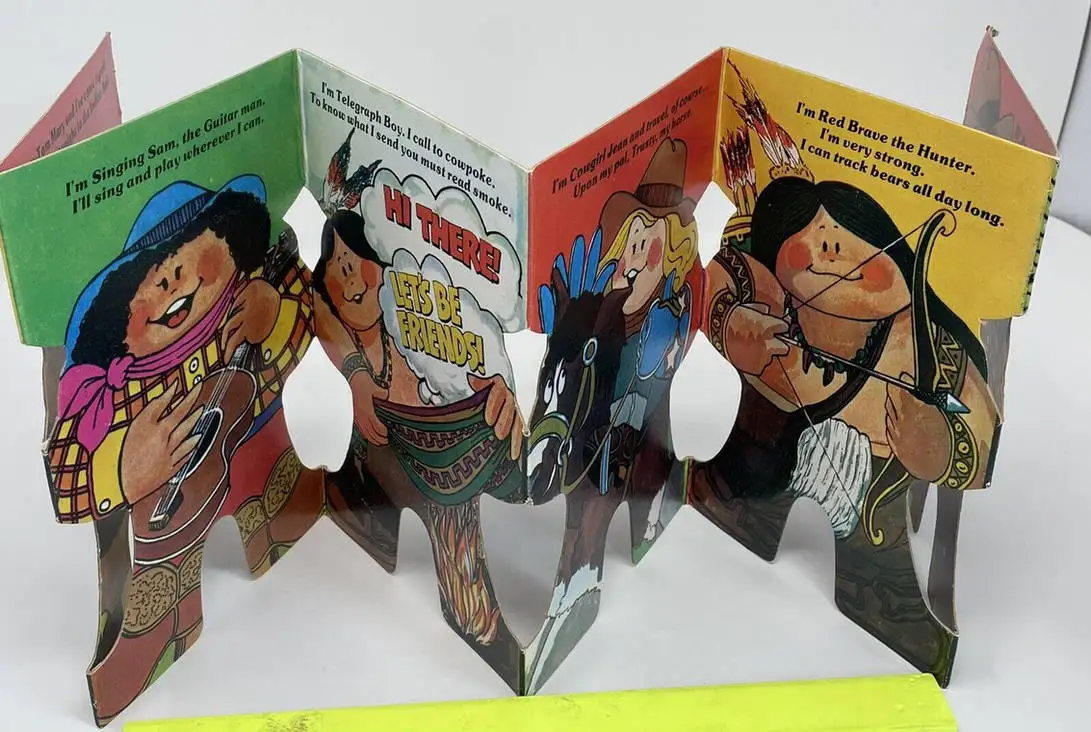
What is a board book, and how does it differ from others? Traditional publishing usually means novels, but published works span much more.
READ MORE

July 24, 2025 .
Essays, Writer Resources
READ MORE
February 8, 2026 .
Writer Resources
Breaking into traditional publishing can feel like decoding a secretive industry. This guide is a resource for finding the right agent.
READ MORE
February 28, 2026 .
Writer Resources
There are three paths in book publishing: traditional, self-publishing, and hybrid. The current focus is on traditional publishing.
READ MORE

July 20, 2025 .
Writer Resources
Today, writers are needed who combine creativity with technical expertise, professionalism, and adaptability.
READ MORE
Get our magazine for free!